What is Aluminum Cast Parts and How Are They Used?
Aluminum cast parts are crucial in various industries, ranging from automotive to aerospace. These components are known for their lightweight properties and excellent strength. According to a recent report by Grand View Research, the global aluminum casting market is expected to reach $106.8 billion by 2025. This highlights the increasing demand for aluminum cast parts in manufacturing.
Industry expert Dr. Emily Carter states, "Aluminum cast parts provide unmatched versatility and efficiency." Her insight underscores the importance of these components in modern engineering. However, the industry faces challenges such as fluctuations in raw material prices and the need for sustainable practices.
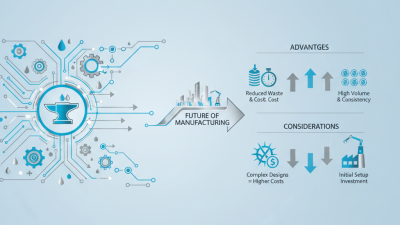
Despite their advantages, not all aluminum cast parts are created equal. Quality and precision are paramount but often overlooked. The growing complexity of designs requires a reevaluation of current manufacturing processes. As industries continue to evolve, so must our understanding and application of aluminum cast parts. Addressing these issues is essential for future advancements in this field.
Understanding Aluminum Cast Parts: Definition and Characteristics
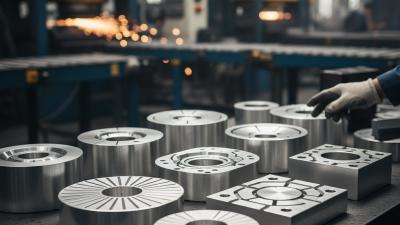
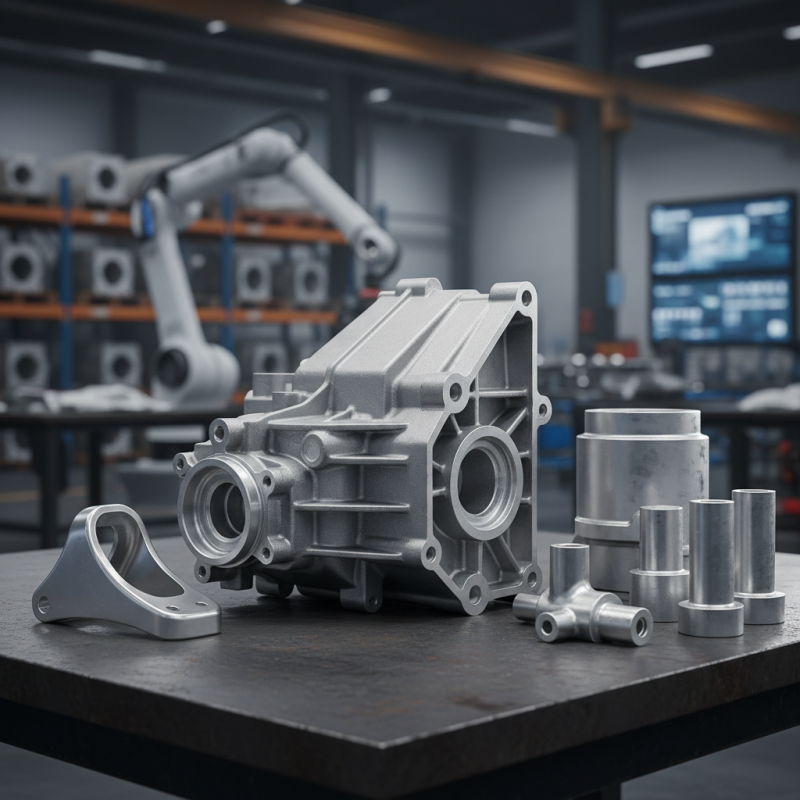
Aluminum cast parts are crucial in various industries. They are lightweight yet strong, which makes them desirable for different applications. The aluminum casting process allows for intricate shapes and designs, enabling manufacturers to create complex components.
According to a report by the Aluminum Association, the global demand for aluminum castings is expected to reach 10 million metric tons by 2025, reflecting its growing significance in automotive and aerospace sectors.
These parts exhibit excellent corrosion resistance and thermal conductivity. Industries use them for engine blocks, transmission housings, and other critical components. However, the production process can impact quality. Issues such as porosity and dimensional inaccuracies can arise. A recent study noted that nearly 12% of aluminum cast parts face quality control challenges during manufacturing. This raises concerns about efficiency and cost-effectiveness. Manufacturers need to address these problems to meet rising demand.
Innovations in casting techniques, like pressure die casting and sand casting, continue to evolve. They enhance productivity, but challenges remain. Research found that optimizing process parameters can improve yield by 15%. Yet, many companies still grapple with consistent execution. Striking a balance between quality and cost remains a persistent challenge. This complexity underpins the importance of meticulous planning in the casting process.
Manufacturing Processes of Aluminum Cast Parts: An Overview
Aluminum cast parts are made through various manufacturing processes. Common methods include
sand casting, die casting, and investment casting. Each process has unique characteristics that affect the final product.
Sand casting is versatile and cost-effective, but it may lack the precision of other methods.
Die casting provides accuracy and quick production but is better suited for high-volume runs.
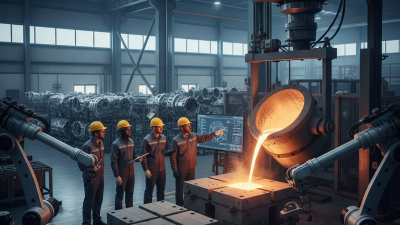
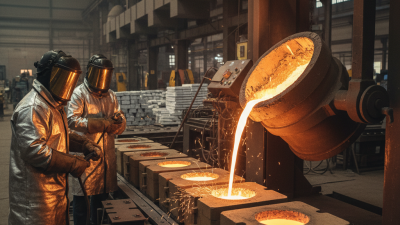
During the aluminum casting process, molten aluminum is poured into molds.
The cooling time varies based on the part's size and thickness. After cooling, parts are removed from molds and may require further finishing.
This includes machining and surface treatments. Each step is crucial, yet some manufacturers overlook quality checks.
The choice of manufacturing process can greatly impact the part's performance. Designers must consider factors like
tensile strength and surface finish.
Sometimes, compromises lead to unexpected issues, like defects or material weaknesses. Reflecting on each decision is vital for achieving high-quality aluminum cast parts.
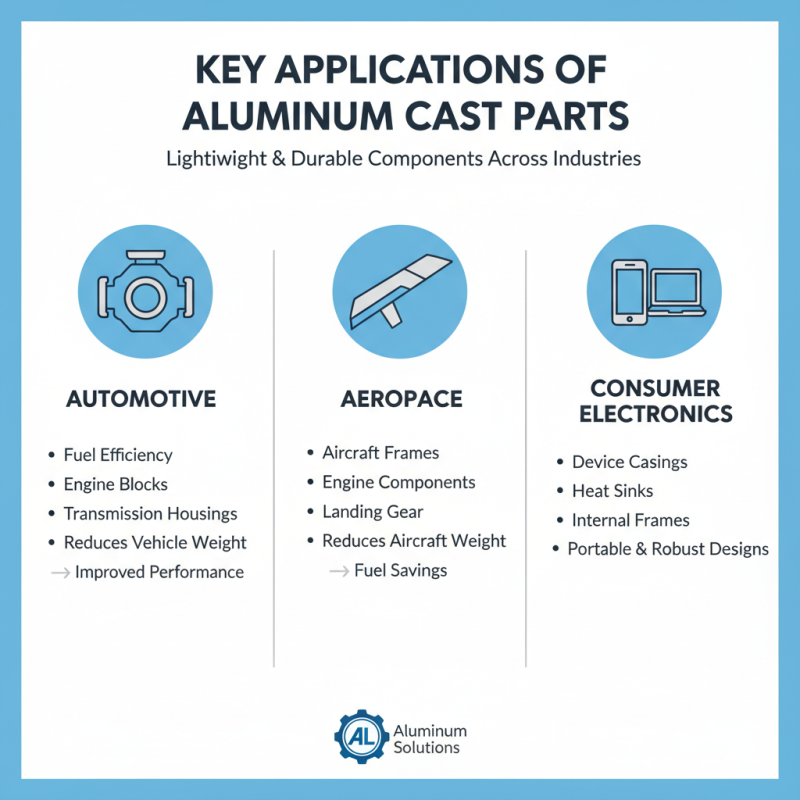
Key Applications of Aluminum Cast Parts Across Industries
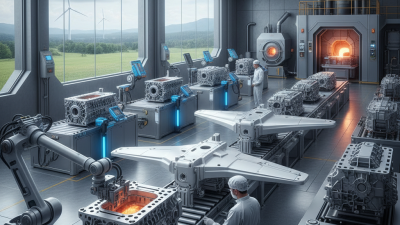
Aluminum cast parts are vital in various industries due to their lightweight and durability. They find applications in automotive, aerospace, and consumer electronics. In the automotive sector, aluminum cast parts contribute to fuel efficiency. Engine blocks and transmission housings are often made from aluminum. This reduces the overall weight of vehicles, improving performance.
In aerospace, aluminum castings are essential for aircraft components. They offer strength without adding excessive weight. Components like brackets and housings are frequently cast from aluminum. However, the challenge lies in achieving the right precision during the casting process. Any defects can lead to serious safety issues.
Consumer electronics also utilize aluminum cast parts. Laptop casings and smartphone frames benefit from aluminum's aesthetic appeal and durability. Yet, the production process must be carefully monitored. Quality control is critical to avoid surface imperfections. These factors highlight the balance needed between innovation and reliability in manufacturing.
Advantages of Using Aluminum Cast Parts in Engineering and Design
Aluminum cast parts are gaining popularity in engineering and design. Their lightweight nature makes them ideal for many applications. According to a recent market report, the aluminum casting market is projected to reach $70 billion by 2026, growing at a compound annual growth rate of over 5%. This growth highlights the increasing reliance on aluminum in various industries.
One significant advantage of aluminum cast parts is their excellent corrosion resistance. This feature is essential for products exposed to harsh environments. These parts can withstand extreme temperatures. Additionally, aluminum’s strength-to-weight ratio is remarkable. It can help reduce the overall weight of components, which is crucial for automotive and aerospace applications.
Another point to consider is the recyclability of aluminum. Approximately 75% of aluminum produced is still in use today. However, the recycling process can be energy-intensive. It poses sustainability challenges despite its benefits. While aluminum cast parts are highly favored, designers must remain mindful of production methods. Balancing benefits and environmental impact is vital for sustainable engineering.
Challenges and Considerations in Aluminum Casting Techniques
Aluminum casting is a popular technique in manufacturing parts. However, it comes with challenges that manufacturers must navigate. One primary concern is achieving the right temperature during the melting process. If the aluminum is too hot, it can lead to oxidation, impacting the metal's quality. Conversely, if it is too cool, it may not fill the mold properly.
Another consideration is the design of the cast parts. Complex shapes can trap air and create defects. This can lead to weak spots in the final product. Engineers often need to simplify designs to ensure a successful casting. Understanding the flow of molten aluminum is crucial to avoid these problems.
Also, the recycling of aluminum adds another layer of complexity. While recycling is beneficial, it can introduce impurities. These impurities can affect the strength and durability of the final piece. Thus, careful sourcing and testing of materials are essential to producing high-quality aluminum cast parts. Manufacturers must continually assess these challenges to improve their processes.
What is Aluminum Cast Parts and How Are They Used? - Challenges and Considerations in Aluminum Casting Techniques
| Aspect |
Details |
| Material |
Aluminum Alloy (e.g., 356, 380) |
| Casting Processes |
Die Casting, Sand Casting, Permanent Mold Casting |
| Applications |
Automotive, Aerospace, Consumer Electronics, Machinery |
| Advantages |
Lightweight, Corrosion Resistant, Excellent Strength-to-Weight Ratio |
| Challenges |
Porosity, Thermal Conductivity, Assuring Dimensional Accuracy |
| Considerations |
Mold Design, Alloy Selection, Process Parameters |
| Post-Processing Techniques |
Machining, Heat Treatment, Surface Finishing |

 +86-13516964051


 CONTACT NUMBER
 CONTACT NUMBER