10 Best Die Cast Car Parts for Collectors and Enthusiasts?
In the world of collecting, Die Cast Car Parts hold a special allure for many enthusiasts. These miniature replicas capture the essence of real automobiles, evoking nostalgia and passion. Renowned expert, John Peterson, remarks, “Die Cast Car Parts inspire a sense of connection that transcends mere collecting.” His words resonate with countless fans who cherish each piece.
These collectibles come in various styles and scales. Details, such as paint finishes and intricate engravings, can truly bring a model to life. Sometimes, though, collectors struggle with finding the perfect piece. The market is vast, yet certain high-demand models can be elusive. This challenge adds complexity to the pursuit.
Moreover, with every new launch, the line between a collectible and a simple toy blurs. Collectors often reflect on whether their passion is truly gratifying. The sheer variety can be overwhelming, leaving one to wonder what truly defines a worthy addition to a collection. These questions keep the enthusiasm alive, ensuring that Die Cast Car Parts remain relevant and cherished.
Best Die Cast Materials: Exploring Zinc, Aluminum, and Other Alloys
Die cast car parts attract many collectors and enthusiasts. The materials used in these parts significantly influence their quality and value. Zinc, aluminum, and other alloys are often employed in die casting. Each has unique properties that cater to different needs in the industry.
Zinc is favored for its durability and ease of casting. It provides a smooth finish, making it appealing for display. According to industry reports, zinc die cast products can resist corrosion better than other materials. This can prolong the lifespan of models, especially when displayed in various environments.
Aluminum, on the other hand, is lightweight and strong. It offers excellent thermal properties and can withstand high temperatures. However, it may not be as easy to cast sharply detailed designs compared to zinc. The choice of alloy can also impact the weight of the final product, leading to possible issues with balance in detailed models. Enthusiasts often engage in discussions about which material is superior, reflecting diverse preferences and opinions in the collecting community.
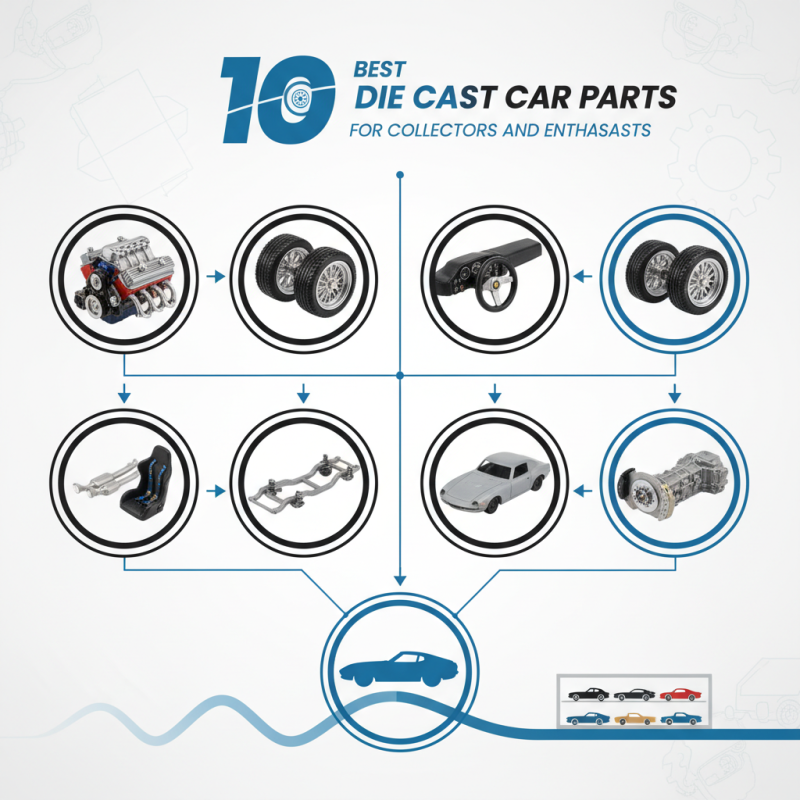
10 Best Die Cast Car Parts for Collectors and Enthusiasts
| Part Name |
Material |
Weight (grams) |
Durability Rating |
Collectibility Score |
| Chassis |
Zinc Alloy |
150 |
8/10 |
9/10 |
| Body |
Aluminum |
120 |
9/10 |
8/10 |
| Wheels |
Zinc Alloy |
50 |
7/10 |
9/10 |
| Interior |
ABS Plastic |
30 |
6/10 |
7/10 |
| Engine |
Aluminum |
80 |
9/10 |
10/10 |
| Transmission |
Zinc Alloy |
70 |
8/10 |
8/10 |
| Suspension |
Aluminum |
60 |
7/10 |
6/10 |
| Doors |
Zinc Alloy |
40 |
7/10 |
9/10 |
| Roof |
Steel |
90 |
8/10 |
7/10 |
| Bumpers |
Aluminum |
50 |
8/10 |
9/10 |
Top Manufacturers: A Review of Leading Die Cast Car Part Brands in the Market
When exploring die-cast car parts, it's essential to look at leading manufacturers. Many esteemed brands are known for their quality and craftsmanship. Collectors seek parts that reflect authenticity and detail. Enthusiasts appreciate the precision in each piece.
Tips: Check for compatibility before buying. Not all parts fit all models. Research the specifications. Some parts may not meet your expectations. Quality can vary, even among recognizable names.
The market is filled with options. Not all products are created equal. Some celebrate the art of die-cast more than others. Every collector has a unique taste. Explore various designs and finishes to find what resonates with you. Think about how each piece complements your collection.
Tips: Consider the longevity of materials. Die-cast parts can age differently. Regular maintenance can preserve their appearance. Keep an eye on trends and innovations. You might discover hidden gems that elevate your display.
Collectability Factors: Rarity, Condition, and Historical Significance in Valuation
When collecting die cast car parts, rarity plays a crucial role in their value. Limited editions create a buzz among enthusiasts. These pieces often attract high prices. A rare part can be a game-changer for a collection. Look for items that were produced in small quantities. These can include unique color variations or specialized features. A simple part can skyrocket in worth due to its scarcity.
Condition is another significant factor. A pristine piece can command a premium. Collectors seek items with no scratches or wear. Original packaging can add another layer of value. However, not every collector can find perfect parts. Many must consider what constitutes a reasonable condition for their budget. Sometimes, you may need to compromise on certain aspects to complete your collection.
Historical significance cannot be ignored. Parts associated with iconic models or events often hold sentimental value. They tell a story and connect collectors to a larger narrative. Yet, it can be challenging to assess this aspect. Some might overlook the history behind a component. The significance may not always be evident at first glance. Nonetheless, the journey of understanding this context is essential for true enthusiasts.
Customization Options: Enhancing Die Cast Car Parts with Aftermarket Add-Ons
Customizing die cast car parts opens a world of creativity for collectors and enthusiasts. Aftermarket add-ons can dramatically enhance the look and feel of a collection. Changing wheels, adding decals, or even upgrading engines can turn a standard model into a unique piece of art. The process can be fulfilling, yet challenging. Some find it hard to achieve the desired results, leading to a mix of frustration and joy.
Many collectors start with simple changes. A fresh paint job can breathe new life into an older model. Some, however, rush into complex modifications. They might ignore the need for careful planning. This can lead to mismatched parts or paint runs. Reading the instructions is crucial but often overlooked. Mistakes become learning opportunities, albeit sometimes costly ones.
Enthusiasts also enjoy building custom displays. A well-designed showcase adds value to any collection. Lighting and background can set the mood. Yet, it’s easy to get carried away with elaborate designs. Balancing aesthetics with practicality is essential. Ultimately, customization should reflect personal style while showcasing creativity.
Maintenance Tips: Preserving the Integrity and Value of Die Cast Collectibles
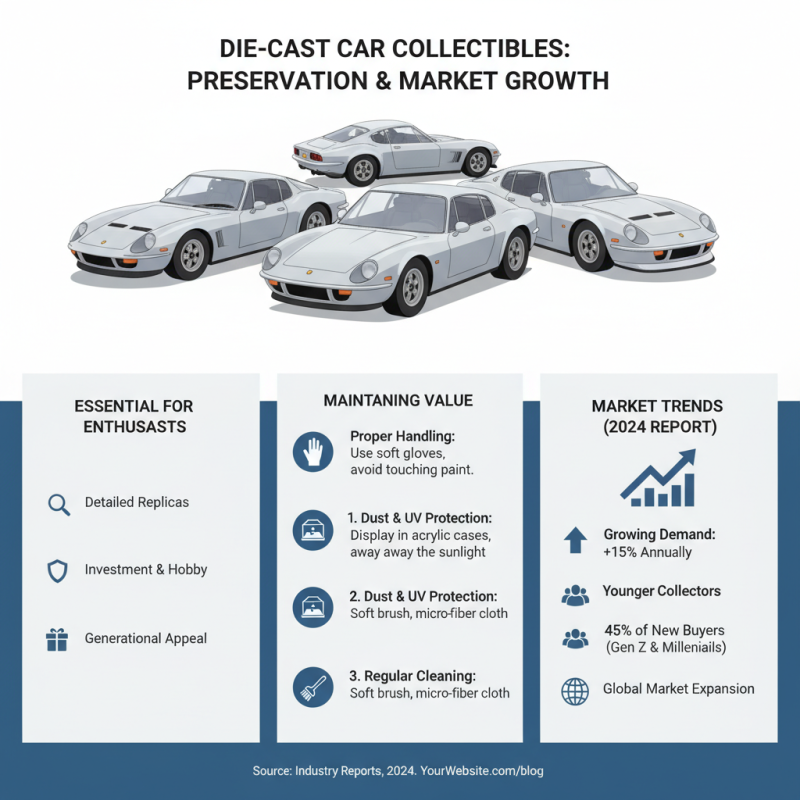
Die cast car collectibles have become essential for enthusiasts and collectors alike. They require care to maintain their value over time. According to industry reports, the market for die cast collectibles continues to grow due to increased interest from younger generations. Understanding how to preserve these items is crucial.
To keep die cast cars in optimal condition, consider the environment where you store them. Avoid direct sunlight and high humidity. Dust can accumulate easily, so regular cleaning is important. Use a soft cloth for surfaces to prevent scratches. Always handle with care; the paint can chip or fade if not treated gently.
Additionally, proper packaging is vital. Use original boxes if possible, as they help maintain value. When transporting, wrap cars securely to prevent damage. Some collectors might overlook these details, thinking minor scuffs are acceptable. In reality, even small imperfections can drastically decrease a car's market value. Staying informed and attentive can make a big difference in a collection's worth.

 +86-13516964051


 CONTACT NUMBER
 CONTACT NUMBER