Leave Your Message

2026 Best Metal Casting Equipment for Your Manufacturing Needs?

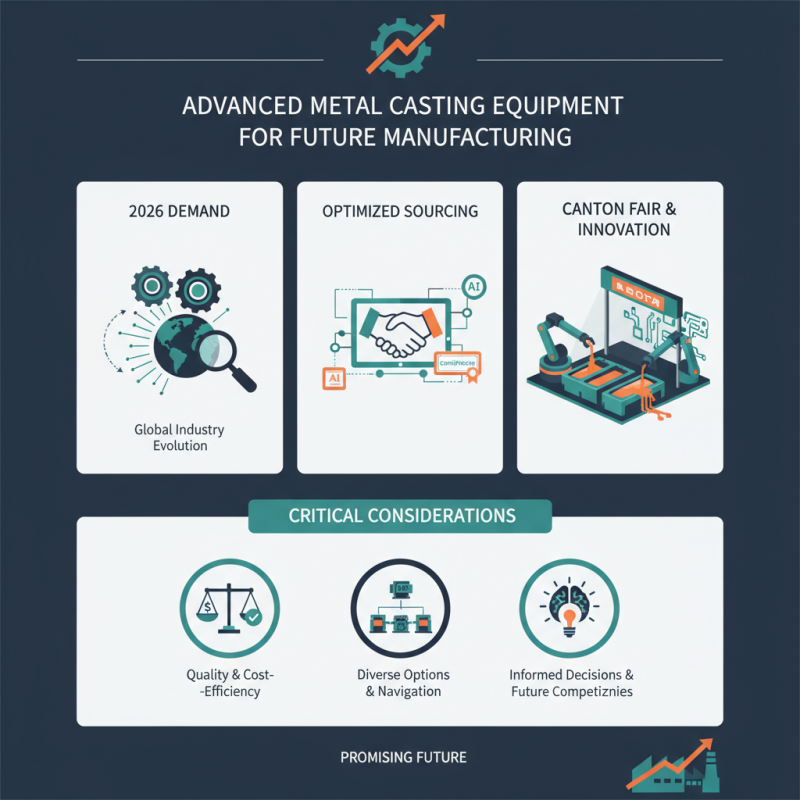
In 2026, the demand for advanced Metal Casting Equipment is set to transform manufacturing. As industries evolve, manufacturers are increasingly seeking optimal solutions. The introduction of AI tools at the 139th Canton Fair enhances procurement efficiency. Buyers can now find suppliers with necessary certifications seamlessly.

Metal casting remains a cornerstone of production. Choosing the right equipment is critical for quality and cost-efficiency. There are diverse options available. It is challenging to navigate through them all. However, attending industry expos can guide decision-making. The Canton Fair showcases cutting-edge technology and innovative designs.

Undoubtedly, the journey to select the best equipment is not straightforward. Many considerations can be overwhelming. Each choice impacts productivity and output. Reflecting on these aspects can lead to better investments. By exploring the latest advancements, manufacturers can ensure they stay competitive. The future of Metal Casting Equipment is promising but requires informed decisions.
2026 Best Metal Casting Equipment for Your Manufacturing Needs?

2026 Trends in Metal Casting Equipment: An Industry Overview

The metal casting industry is evolving rapidly. In 2026, manufacturers will face new challenges and opportunities. A recent industry analysis indicates a projected growth rate of 5.4% annually through 2027. This growth is largely driven by advancements in technology and increased demand for lightweight materials.

3D printing is becoming more prevalent in casting processes. This trend allows for rapid prototyping and reduces material waste. Estimates suggest that additive manufacturing could decrease production time by up to 70%. However, adapting to these innovations requires investment and training, which many manufacturers are struggling to implement.

Sustainability is also a pressing concern. Industries are shifting towards greener practices. A study showed that 30% of casting operations plan to reduce emissions by 40% in the next five years. Yet, the transition is not straightforward. Many businesses need to overcome obstacles like high costs and technology gaps. Balancing efficiency and environmental responsibilities remains a critical challenge.
Key Features to Look for in Metal Casting Equipment for Factories

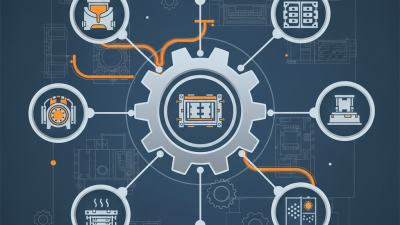
When selecting metal casting equipment, several key features can significantly impact manufacturing efficiency. Precision is paramount. Equipment should enable consistent, high-quality casts. Look for machines that offer adjustable settings. This flexibility allows for experimentation and optimization of the casting process. The ideal equipment should be user-friendly, ensuring that operators can navigate controls easily. Complicated interfaces may lead to mistakes and inefficiencies.

Another important aspect is material compatibility. Different metals have unique properties. Ensure the equipment can handle the specific types of metal used in your production. Also, consider the size and scale of operations. Large-scale production might require different capabilities than smaller batch casting. Think about energy efficiency as well. High energy costs can eat into profits, so seek machines designed to reduce consumption. Some machines might have features that promote sustainability, which can be an added bonus.

Maintenance is often overlooked. Ensure that the equipment is designed for easy upkeep. Some machines are complex and require specialized tools for repairs. This can lead to downtime. Regular maintenance checks can help prolong the lifespan of the equipment. Also, think about the long-term support from manufacturers. A lack of responsiveness could harm future operations. Evaluating these features ensures that you choose the best equipment for your manufacturing needs.

2026 Best Metal Casting Equipment for Your Manufacturing Needs - Key Features to Look for in Metal Casting Equipment for Factories

Equipment Type Key Features Material Compatibility Production Capacity Energy Efficiency
Induction Furnace Rapid melting, precise temperature control Ferrous and non-ferrous metals Up to 10 tons/hour High efficiency with low emissions
Die Casting Machine High precision, quick cycle times Aluminum, zinc, magnesium 50,000 units per month Optimized for energy savings
Sand Casting Equipment Versatile mold creation, easy setup Ferrous and non-ferrous alloys Variable based on mold size Moderate energy use
Investment Casting Equipment High detail, low waste Steel, stainless steel, superalloys Up to 100,000 components Very efficient, low footprint
Vacuum Casting Machine Reduced oxidation, improved finish Various metals and plastics Custom based on project Efficient use of resources

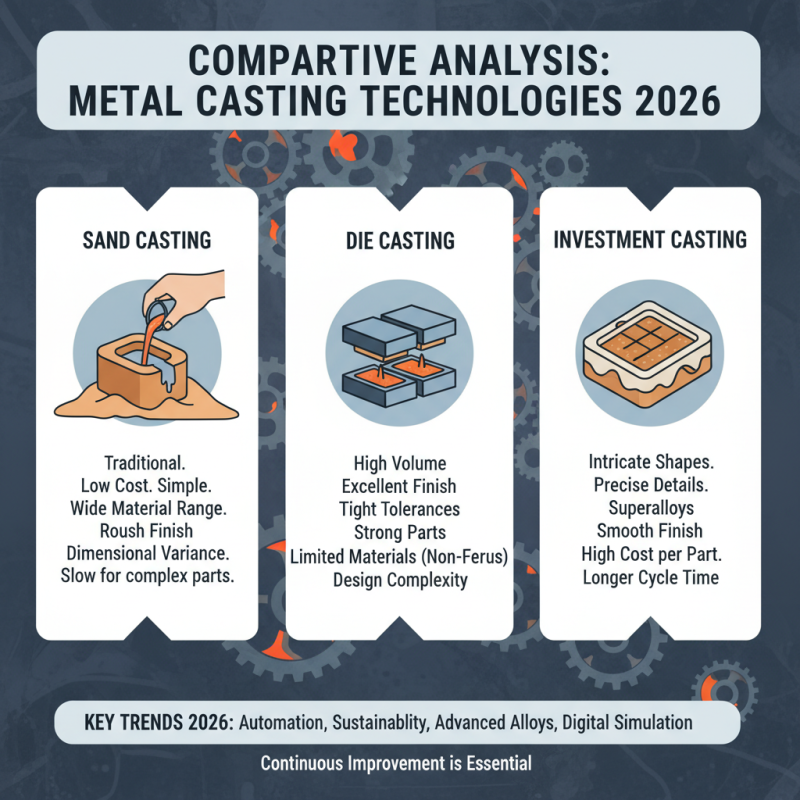
Comparative Analysis of Leading Metal Casting Technologies in 2026

2026 Best Metal Casting Equipment for Your Manufacturing Needs?

In 2026, metal casting technologies are evolving rapidly. Each method offers unique advantages and challenges for manufacturers. Traditional sand casting remains popular due to its simplicity and low cost. However, it often results in inconsistencies in finish quality. Continuous improvement in production techniques is essential.

Investment in advanced technologies like 3D printing is on the rise. This method allows for complex shapes with minimal waste. Yet, it can be costly to implement. Many manufacturers face a learning curve with the technology, which can hinder productivity. Monitoring the balance between innovation and cost is crucial for success.

Die casting techniques offer speed and excellent precision. They create high-quality components efficiently. Nonetheless, setup costs can deter some manufacturers from utilizing this method. Some may overlook the environmental impact of various casting processes. Assessing sustainability should be a vital part of decision-making. Balancing efficiency, cost, and environmental considerations is challenging but necessary.

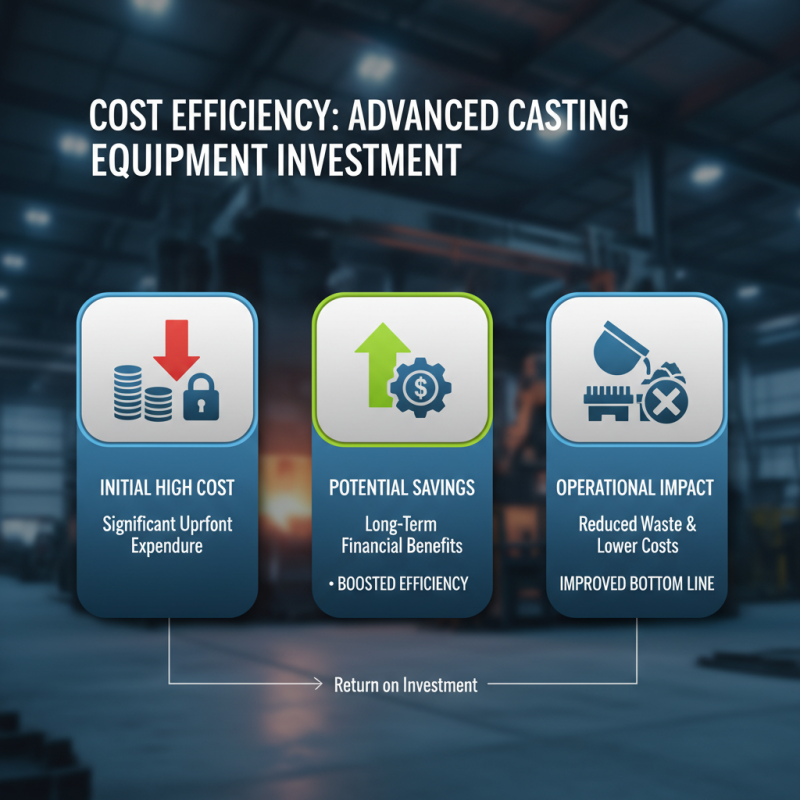
Cost Efficiency: Evaluating Investment in Advanced Casting Equipment

2026 Best Metal Casting Equipment for Your Manufacturing Needs?

Investing in advanced metal casting equipment can seem daunting. The initial costs may be high, but the potential savings must be considered. Modern equipment often uses technology that boosts efficiency. This shift can lead to lower operational costs. Reduced wastage directly impacts the bottom line.

While the benefits are clear, challenges still exist. Maintenance of sophisticated machines requires skilled personnel. Training current staff can stretch budgets. New technologies come with learning curves. Manufacturers must weigh the immediate costs against long-term gains. Delays in production can occur during the transition period. It’s crucial to identify if the investment aligns with production needs.

Cost efficiency isn't just about the price tag. It involves understanding how equipment can improve workflows. Streamlined processes often result in quicker turnarounds. However, if the equipment isn't a good fit, the investment may not lead to expected improvements. Reflection on production needs and market demands is essential before making a choice.

Safety Standards and Compliance in Metal Casting Machinery for 2026

In 2026, safety standards in metal casting machinery are more important than ever. Manufacturers are focusing on compliance with rigorous regulations. These measures are designed to protect workers while ensuring high-quality production. An effective metal casting operation involves regular maintenance and thorough inspections of all equipment. Neglecting these aspects can lead to accidents or failures.

Machinery must include safety features to minimize risks. This can involve emergency shut-off systems, guards, and warning signals. Workers should be trained to recognize and react to potential hazards. The right training can significantly reduce workplace injuries. However, some facilities still struggle with inadequate training programs. Continuous improvement is essential here.

Audit processes are another crucial aspect. Regular safety audits help identify weaknesses. Compliance should not be just a checkbox; it requires genuine engagement. Creating a culture of safety takes effort and persistence. Small oversights can lead to serious consequences, urging manufacturers to reflect on their practices continually. Enhancing safety standards contributes not only to employee well-being but also enhances productivity.

2026 Best Metal Casting Equipment: Safety Standards Compliance