2026 Best Zinc Casting Techniques and Applications for Industry?
Zinc casting is a critical process in various industries. It involves shaping molten zinc into specific forms. Manufacturing expert Dr. Emily Thompson states, "Zinc casting transforms raw materials into innovative solutions.” Her insight highlights the importance of this technique.
The year 2026 brings new advancements in zinc casting methods and applications. For instance, industries are focusing on improving efficiency and product quality. Die casting remains a popular technique due to its precision. Innovations are leading to better alloys and casting processes. Companies are continuously adapting to market demands.
However, challenges exist. Maintaining environmental standards is vital. The industry must balance production and sustainability. Improvement is ongoing, but some techniques remain outdated. The evolution in zinc casting is not just about technology; it’s also about thoughtful application and responsibility.
Best Zinc Casting Techniques for 2026: An Overview
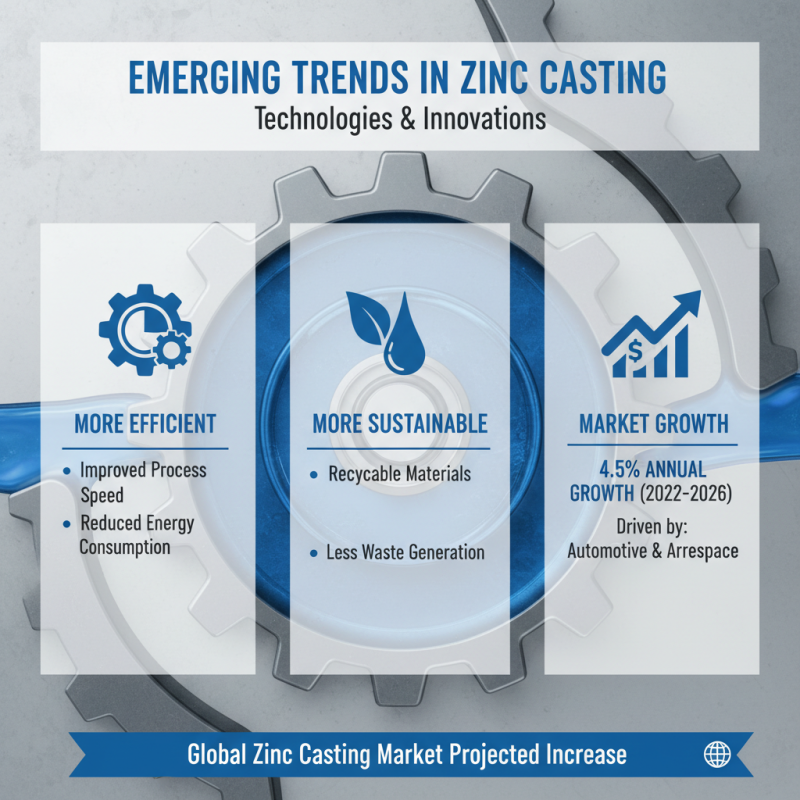
Zinc casting techniques have evolved significantly, offering diverse applications in various industries. In 2026, innovations in die casting and sand casting are at the forefront. According to recent industry reports, the global zinc alloy market is projected to grow by 4.5% annually, driven by increasing demand in automotive and consumer goods sectors.
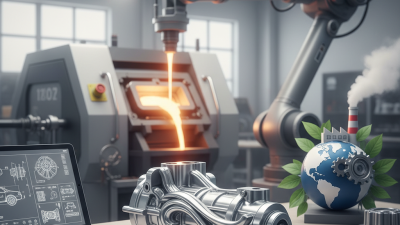
Die casting remains a preferred technique for producing precise, high-quality components. This method minimizes waste and enhances production speed. Findings indicate that die-cast zinc parts can achieve tolerances of ±0.1 mm, making them ideal for intricate designs. However, challenges persist, including the need for specialized tooling and potential defects like porosity. These issues require continuous improvement and adaptation.
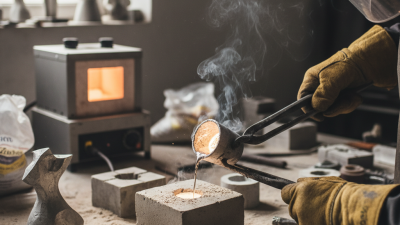
Sand casting, on the other hand, offers flexibility in production. It allows for larger components and low-volume runs. Recent analyses show that sand casting can reduce costs by up to 30% compared to other methods. Yet, the finish quality may not match die casting, which can be a drawback in high-performance applications. Both techniques have merits and limitations, emphasizing the need for careful selection based on project requirements.
2026 Best Zinc Casting Techniques and Applications for Industry
This chart illustrates the projected popularity of various zinc casting techniques in 2026, highlighting the leading methods in the industry.
Key Properties of Zinc Alloys Used in Casting Applications
Zinc alloys are essential in casting applications due to their unique properties. They offer excellent fluidity, making them easy to mold into intricate shapes. This characteristic allows for precise details in cast parts, which is vital for many industries, including automotive and aerospace. The low melting point of zinc alloys facilitates faster production rates, enhancing efficiency in manufacturing.
Furthermore, zinc alloys exhibit strong corrosion resistance. This makes them suitable for outdoor applications where exposure to the elements is a concern. The durability of these alloys minimizes maintenance needs, which can lead to cost savings over time. However, the strength of zinc alloys may not always meet the demands of high-stress applications. This limitation should be evaluated based on specific project requirements.
Another key property is their ability to be easily machined. This adaptability is beneficial when post-casting modifications are needed. Yet, while working with zinc alloys, attention must be given to tool wear, as excessive friction can lead to premature failure. The balance between ease of casting and mechanical strength is crucial for successful application in industrial contexts.
Industry Applications: Where Zinc Casting Excels in Manufacturing
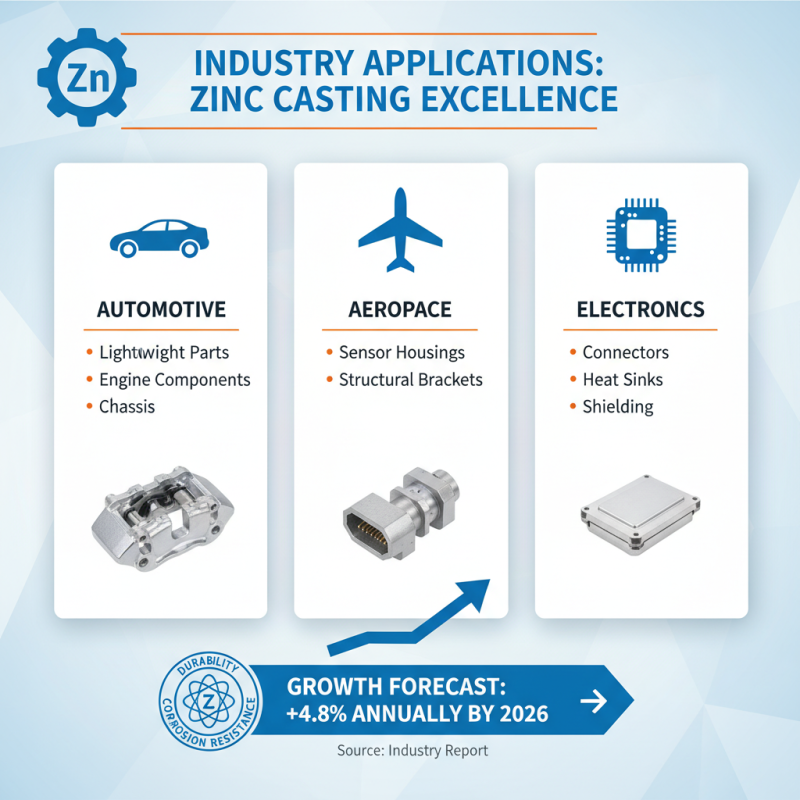
Zinc casting is gaining traction in various industries due to its unique properties. Used extensively in automotive, aerospace, and electronics, zinc alloys provide excellent corrosion resistance and durability. A recent industry report indicates that the demand for zinc die-castings will grow by 4.8% annually through 2026. This rising trend underscores the material's versatility in manufacturing.
In automotive applications, zinc castings contribute to lightweighting without sacrificing strength. They are ideal for complex designs, notably in engine components and trim parts. Data from engineering studies show that using zinc can lead to a 25% reduction in weight compared to traditional materials. This weight reduction enhances fuel efficiency, appealing to manufacturers striving for sustainability.
**Tip:** Ensure the design allows for efficient cooling during casting. This can improve the integrity of the final product.
Zinc is also favored in electronics, where it serves as a shielding material. The non-magnetic properties prevent interference with signals. As per the latest market analysis, electronics composed of zinc alloys showed 30% better performance under stress tests. Nonetheless, challenges exist. Fluctuating zinc prices can affect production costs. Companies must stay informed to navigate this variability effectively.
**Tip:** Regularly review supplier contracts to mitigate sudden price changes.
Quality Control Measures in Zinc Casting Processes for Optimal Results
Quality control is crucial in zinc casting processes. It ensures that products meet industry standards and specifications. The nature of zinc alloys requires precise control during casting. Manufacturers must monitor the temperature and cooling rates closely. Variations can lead to defects, affecting the strength and appearance of the final product.
Common quality control measures include visual inspections and dimensional checks. Operators often use gauges to verify measurements. However, this process is not foolproof. Human error can lead to overlooked defects. Implementing automated systems can reduce this risk. Still, not all facilities have access to advanced technology. Finding the right balance between human oversight and automation is challenging.
Regular training for staff is essential. Workers should understand the intricacies of zinc casting. Knowledgeable personnel can identify potential issues early. Documentation of processes is also important. It creates a reference for future improvements. However, maintaining updated records can be tedious. This inconsistency can hinder quality assurance efforts. Continuous evaluation of both processes and staff can enhance overall outcomes.
2026 Best Zinc Casting Techniques and Applications for Industry
| Casting Technique |
Application Area |
Key Quality Control Measures |
Optimal Temperature Range (°C) |
Typical Defects |
| Die Casting |
Automotive Components |
Pressure Monitoring, Visual Inspection |
400 - 450 |
Porosity, Incomplete Filling |
| Sand Casting |
Industrial Machinery |
Grain Size Analysis, Hardness Testing |
380 - 420 |
Surface Imperfections, Cracking |
| Investment Casting |
Aerospace Parts |
Dimensional Control, X-ray Inspection |
350 - 400 |
Dimensional Inaccuracy, Inclusion |
| Centrifugal Casting |
Pipes and Tubes |
Rotational Speed Monitoring, Cooling Rate Control |
400 - 500 |
Surface Cracks, Erosion |

 +86-13516964051


 CONTACT NUMBER
 CONTACT NUMBER