How to Choose the Right Vacuum Booster for Your Needs?
Choosing the right Vacuum Booster can be a daunting task. Experts like John Smith, a renowned engineer in the vacuum technology field, emphasize, “The right vacuum booster can significantly enhance your operation's efficiency.” This statement underscores the importance of making informed choices.
When considering a Vacuum Booster, it is essential to assess your specific needs. Different applications require varying levels of performance. Understanding these requirements can prevent common pitfalls, like selecting a model that lacks sufficient power.
Moreover, reliability is crucial. Many manufacturers claim high efficiency, but not all deliver. Researching user reviews and expert opinions can help you avoid potential disappointment. Keep in mind that the best option may not always be the most expensive one, but one that aligns with your operational needs.
Identifying Your Specific Vacuum Booster Requirements and Goals
Choosing the right vacuum booster can feel overwhelming. Your specific requirements and goals are crucial for making the best decision. Assess how you plan to use the booster. Will it be for a small workshop, or do you need it for industrial applications? Understanding your environment will guide your selection.
Consider the volume of material you will handle. If you're working with dust and fine particles, you might need a more powerful solution. Evaluate the pressure levels required. Some tasks demand stronger suction, while others may work fine with less. This aligns your choice with your operational needs.
Don’t overlook the maintenance aspect. A vacuum booster’s long-term performance depends on how well you maintain it. Frequent upkeep is necessary for optimal performance. Sometimes, we underestimate the importance of regular checks, leading to inefficiencies. Reflect on your past experiences. What worked, and what didn't? Every project is a learning opportunity.
How to Choose the Right Vacuum Booster for Your Needs?
| Feature |
Description |
Importance |
Recommended Specifications |
| Suction Power |
Determines how effectively the vacuum booster can lift materials. |
High |
≥ 500 mmHg |
| Airflow Rate |
The volume of air moved per minute, affects efficiency. |
Medium |
≥ 100 CFM |
| Power Consumption |
Amount of electrical power required to operate the booster. |
High |
≤ 300 Watts |
| Noise Level |
The operational noise produced during function. |
Medium |
≤ 65 dB |
| Size and Portability |
Compact design for ease of movement and storage. |
Medium |
< 30 lbs |
Understanding Different Types of Vacuum Boosters and Their Applications
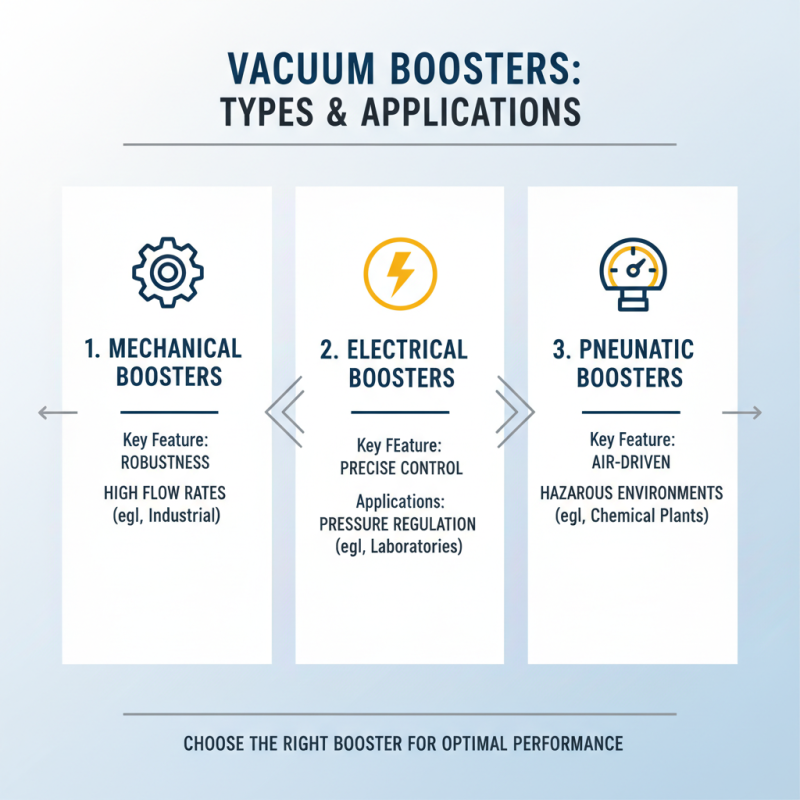
When selecting a vacuum booster, understanding the various types available is crucial. There are typically three main categories: mechanical, electrical, and pneumatic boosters. Each type serves unique applications, which can significantly impact performance. According to industry reports, mechanical boosters are favored for their robustness, often achieving high flow rates. In contrast, electrical boosters offer the advantage of precise control over pressure levels, making them popular in laboratories.
Pneumatic boosters, while less common, shine in specific environments requiring compact designs and lightweight setups. For instance, in the medical field, their portability allows for integration into mobile equipment. Reports indicate that user feedback highlights issues with noise levels and maintenance ease across different booster types. This feedback suggests that while performance is paramount, considerations regarding user experience cannot be overlooked.
Moreover, the efficiency of vacuum boosters can vary greatly based on the operating conditions. For example, environmental factors such as humidity and temperature may influence efficiency ratings. Professional studies show that up to 30% of efficiency can decline under unfavorable conditions. Choosing the right booster must involve a careful evaluation of these factors to ensure optimal performance and reliability.
Evaluating Key Performance Metrics: Flow Rate, Pressure, and Noise Levels
When selecting a vacuum booster, evaluating flow rate, pressure, and noise levels is crucial. The flow rate indicates how much air the booster moves. High flow rates can increase efficiency in many applications, such as pneumatic conveying. However, a higher flow rate may not always suit your system needs. It's essential to find the right balance for optimal performance.
Pressure is another critical factor. It determines how effectively the vacuum can lift materials. Having insufficient pressure can lead to poor performance and increased wear on the system. Ensure your vacuum booster can handle the pressure requirements for your specific tasks.
Noise levels are often overlooked but can significantly impact the work environment. A quieter booster may reduce fatigue in workers and enhance overall productivity. Look for models that balance performance with acceptable noise levels. These considerations create a well-rounded selection process. Reflection on these metrics helps pinpoint the best vacuum booster for your needs.
Comparing Cost and Energy Efficiency of Various Vacuum Booster Models
When selecting a vacuum booster, energy efficiency and cost are critical factors. Different models vary widely in both initial purchase price and long-term operational costs. It’s essential to analyze the energy consumption ratings of each model. Some may appear affordable at first but lead to higher energy bills over time. This often happens with older designs that are less efficient.
Consider the expected performance and how it meets your needs. A model that consumes more energy may provide powerful suction. However, if it's too powerful for your application, you might be wasting resources. It’s important to evaluate your requirements to avoid such mismatches. Energy-efficient models are often more expensive upfront, but they can reduce operational costs.
It’s also advisable to read expert reviews and user experiences. Some users report that certain models have unexpected maintenance costs that can add up. Look for models with a good service network. This ensures support when needed. By weighing these factors, you can make an informed choice that balances performance and efficiency.
Assessing Maintenance Needs and Longevity for Your Chosen Vacuum Booster
When selecting a vacuum booster, maintenance and longevity are crucial factors to consider. Regular maintenance ensures optimal performance. A well-maintained vacuum booster can last for many years. Neglecting maintenance can lead to costly repairs or replacements. Understanding the specific maintenance requirements of your chosen model is essential.
Tips: Check manufacturer guidelines. Regularly inspect for leaks. Clean filters and components to prevent wear.
Longevity often depends on the environment in which the vacuum booster operates. Exposure to dust, moisture, and extreme temperatures can affect its lifespan. Evaluate your operational conditions and choose a model suited for those environments.
Tips: Store your vacuum booster in a dry place. Avoid prolonged exposure to harsh conditions. Conduct routine checks to identify potential issues early.
Investing time in maintenance practices can yield significant benefits. Implementing these strategies fosters reliable performance. Regular assessments will help you understand if your vacuum booster is functioning as intended.

 +86-13516964051


 CONTACT NUMBER
 CONTACT NUMBER