Why Are Metal Parts Essential for Global Manufacturing Supply Chains?
Metal parts are critical to global manufacturing supply chains. They form the backbone of many industries, from automotive to aerospace. According to a recent report by the International Federation of Robotics, metal parts account for nearly 50% of all manufactured goods. This reliance on metal components highlights their indispensable role.
In the automotive sector, for example, over 80% of vehicle production utilizes metal parts. Steel, aluminum, and titanium are the primary materials driving this industry. Their strength, durability, and versatility make them ideal for various applications. However, supply chain disruptions have shown vulnerabilities. Metal prices fluctuate unpredictably, affecting manufacturers worldwide.
As the demand for sustainable practices rises, manufacturers must reflect on their metal sourcing. The industry faces challenges in sourcing responsibly. Recycling metals could offer solutions, reducing dependency on raw extraction processes. Embracing innovation in metal production is urgently required for supply chain resilience. These changes could redefine industry standards while enhancing sustainability.

Importance of Metal Parts in Manufacturing Processes
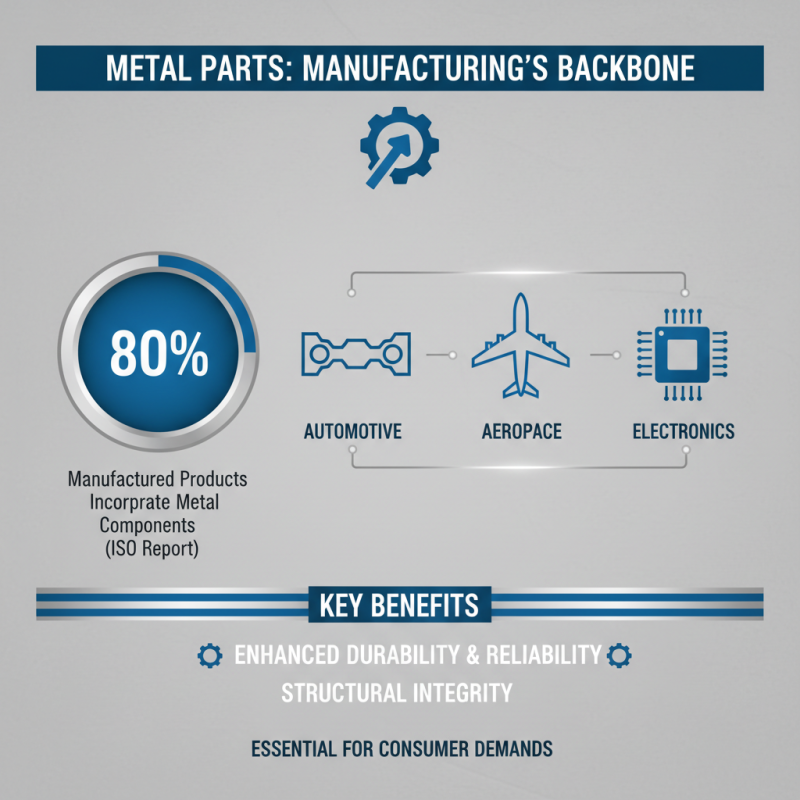
Metal parts play a pivotal role in manufacturing processes across various industries. According to a report by the International Organization for Standardization (ISO), nearly 80% of manufactured products incorporate metal components. These parts enhance durability and reliability, essential for meeting consumer demands. The automotive, aerospace, and electronics sectors heavily depend on metals for their structural integrity.
Manufacturers often face challenges in sourcing high-quality metal parts. Fluctuations in supply and rising costs can affect production timelines. Despite advancements in technology, certain intricacies remain. Whether it’s the precision required for aerospace components or the versatility demanded in consumer electronics, issues continue to arise. In 2021, the Global Manufacturing Outlook noted that 65% of companies identified supply chain disruptions linked to metal shortages.
Moreover, the environmental impact of metal sourcing is a pressing concern. According to the World Steel Association, the steel industry accounts for around 7% of global CO2 emissions. There’s a growing call for sustainable practices in sourcing and recycling metals. The challenge lies in balancing efficiency and environmental responsibility, a task that requires innovation and commitment from all stakeholders in the supply chain.
Role of Metal Parts in Global Supply Chain Efficiency
Metal parts play a crucial role in global manufacturing supply chains. They are vital for maintaining efficiency and reliability in production processes. Many industries rely on metal components to ensure structural integrity and durability. From automotive to aerospace, these parts are integral to product functionality and safety.
Metal components offer strength and resilience, allowing products to withstand harsh conditions. Their versatility enables manufacturers to produce a wide range of items. Additionally, supply chain disruptions can stem from the availability of metal parts. Shortages or delays can significantly affect production timelines, leading to increased costs. Companies must remain aware of these risks.
Tip: Regularly assess your supply chain for potential weaknesses. Identify critical suppliers and foster strong relationships with them. This can help mitigate risks associated with metal part shortages.
Investing in advanced technologies can enhance production efficiency. Automated processes can reduce lead times for metal part fabrication. However, not all companies utilize these technologies effectively. Some may resist change, fearing the costs or complexity involved. Embracing innovation is essential for long-term success.
Tip: Consider seeking expert advice when implementing new technologies. This can save time and prevent costly mistakes. Ensure your team is trained to adapt to new systems.
Importance of Metal Parts in Global Manufacturing Supply Chains
Impact of Metal Quality on Product Durability and Performance
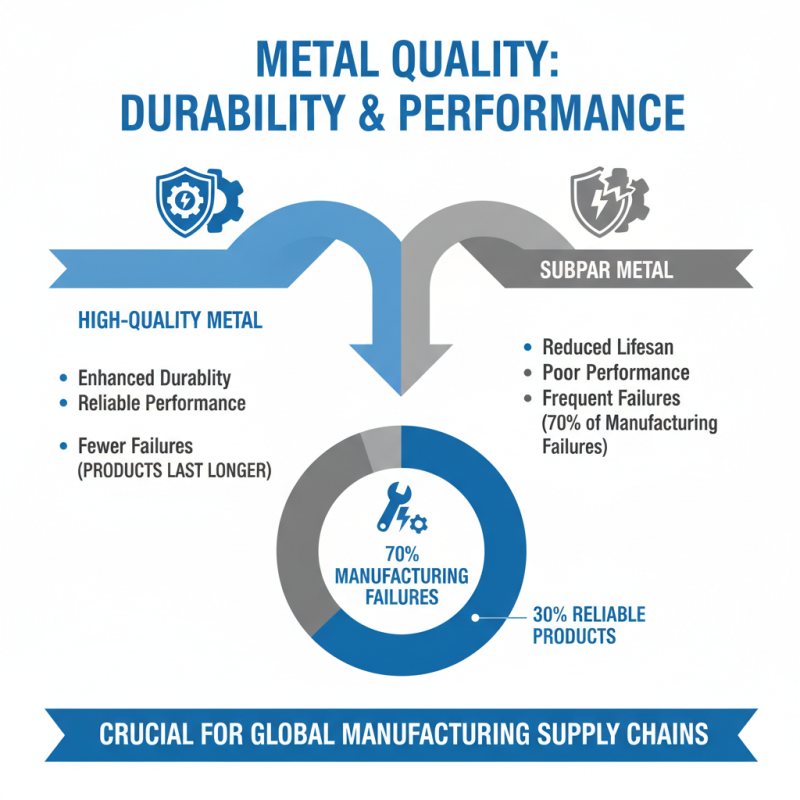
Metal parts play a crucial role in global manufacturing supply chains. Their quality directly impacts the durability and performance of products across various industries. Reports indicate that nearly 70% of manufacturing failures stem from subpar material quality. This statistic emphasizes the importance of using high-quality metals in production.
Low-quality metals can lead to product failures and safety issues. In aviation and automotive sectors, the reliability of metal components is non-negotiable. For instance, aircraft made with high-grade aluminum can withstand extreme conditions, reducing the risk of structural failure. On the contrary, inferior metals can compromise safety and lead to significant financial losses.
Tips: Ensure your supply chain includes certified suppliers. Regular quality assessments can prevent potential failures. Prioritize metal alloys known for their strength and resilience, such as those used in military applications. Remember, investing in quality can save costs in the long run.
Challenges in Sourcing and Producing Metal Components
Sourcing and producing metal components face several challenges. Global demand for metals has surged, driven by industries like automotive and aerospace. According to the International Aluminum Institute, global aluminum demand is projected to reach 73 million tons by 2025. This growing demand strains an already stretched supply chain.
One major hurdle is the volatility of metal prices. The London Metal Exchange reported fluctuations of up to 75% in some metal prices last year. Such price instability complicates budgeting for manufacturers. Furthermore, geopolitical tensions and trade disputes can disrupt supply routes. This uncertainty leads to delays in production schedules and increased costs.
Sustainability is another concern in metal production. As industries aim to reduce carbon footprints, sourcing eco-friendly materials becomes essential. However, recycling rates for metals vary widely. For instance, the recycling rate for steel is around 85%, while aluminum stands at about 75%. This disparity presents challenges in meeting sustainability goals. Manufacturers must navigate these realities while ensuring reliability in their supply chains.
Future Trends in Metal Parts for Sustainable Manufacturing
The landscape of global manufacturing is evolving rapidly, and metal parts play a vital role. As industries seek sustainability, the focus is shifting toward eco-friendly metals. Innovations in production methods are emerging, creating lighter, stronger materials. These advancements reduce waste and improve efficiency. However, challenges remain in sourcing sustainable metals. The extraction and processing of metals can still be environmentally damaging.
Future trends indicate a growing emphasis on recycled metals. Using reclaimed materials not only reduces waste but also lowers energy consumption. Manufacturers are exploring new alloys that enhance performance while maintaining sustainability. The development of biocompatible metals is also gaining traction. Yet, this area requires further research to ensure safety and effectiveness.
These trends reflect a necessary change in manufacturing priorities. While advancements are promising, they reveal a complex interplay of benefits and drawbacks. Balancing innovation with environmental responsibility can be daunting. Metal parts must evolve continually, navigating the pursuit of both performance and sustainability. The conversation is ongoing. Further dialogue is essential to address these intricate issues.
Why Are Metal Parts Essential for Global Manufacturing Supply Chains? - Future Trends in Metal Parts for Sustainable Manufacturing
| Metal Type |
Key Characteristics |
Applications |
Sustainability Factors |
| Steel |
Durable, high tensile strength, recyclable |
Automotive parts, construction, machinery |
Recyclability, reduced carbon footprint |
| Aluminum |
Lightweight, corrosion resistant, highly conductive |
Aerospace, electronics, packaging |
Energy-efficient production, recyclable |
| Titanium |
High strength-to-weight ratio, resistant to corrosion |
Medical devices, aerospace, automotive |
Long lifespan, lightweight design reduces fuel consumption |
| Copper |
Excellent electrical conductivity, ductile |
Electrical wiring, plumbing, roofing |
Recyclable, efficient energy transfer |

 +86-13516964051


 CONTACT NUMBER
 CONTACT NUMBER