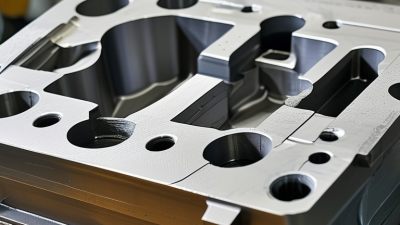
Why Choose Metal Die Casting for Your Manufacturing Needs?
Metal Die Casting remains a practical choice when manufacturers need repeatable metal parts at production scale. Grand View Research estimated the global die-casting market at USD 80.92 billion in 2023 and projected a 6.4% compound annual growth rate from 2024 to 2030. That scale matters. It reflects demand across sectors such as automotive, industrial equipment, and consumer products, where consistent dimensions and efficient material use can affect both cost and performance.
Vehicle design is one visible driver. The International Energy Agency reported nearly 14 million electric cars were sold worldwide in 2023, representing about 18% of all car sales. Many vehicles, electric and conventional, use cast components in structures and powertrain systems. A die-cast housing can combine several features in one part, potentially reducing assembly steps. Yet the figures do not prove that die casting suits every design. Tooling can be costly, and part geometry, alloy choice, expected volume, and quality requirements all matter.
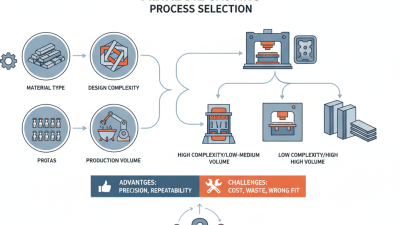
That choice needs careful review. A manufacturing team should compare the full process, not just the unit price: tooling investment, cycle time, finishing, inspection, and material performance. For example, a thin-walled aluminum enclosure may benefit from high-pressure die casting when production volumes justify its tooling. A low-volume part may not. The right decision comes from matching process capabilities to real product requirements, then validating the design with engineers and production trials. Metal Die Casting is compelling—but only when the application supports it.
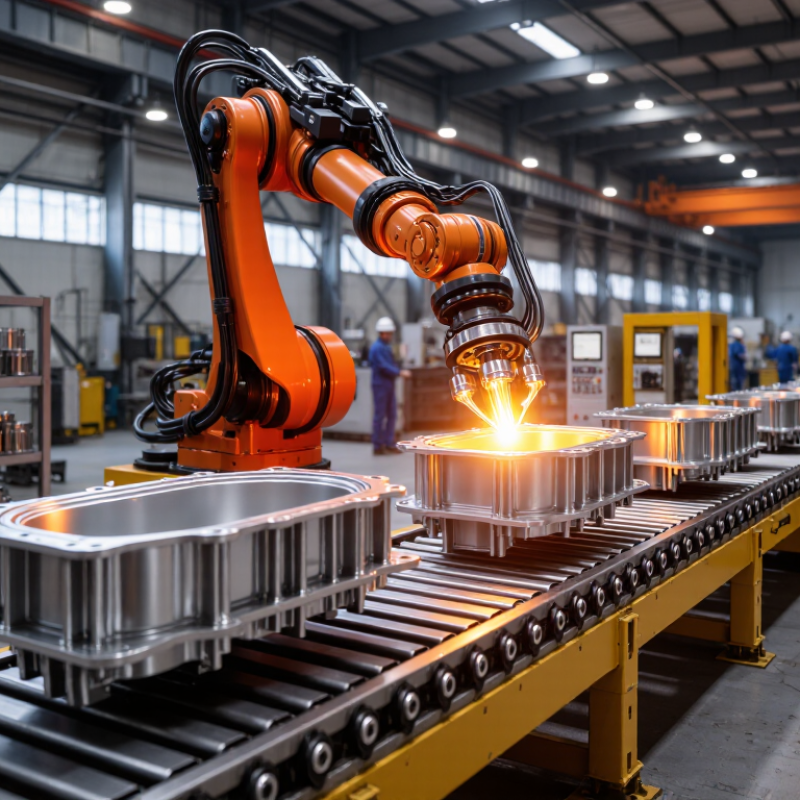
How High-Pressure Die Casting Forms Parts at Injection Pressures of 10–175 MPa
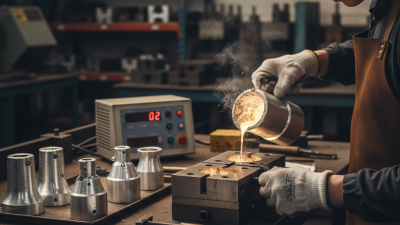
At 10–175 MPa (100–1,750 bar), high-pressure die casting forces molten metal into a closed steel die. The pressure helps fill thin ribs, narrow channels, and detailed features before the metal solidifies. A shot can take milliseconds. That speed supports repeatable production, but it makes die temperature, gate design, and venting important. One practical caveat: pressure alone cannot fix a poor filling layout.
Machine settings depend on the alloy and part geometry. Too little pressure may leave incomplete edges; excessive filling speed can trap air and create porosity. The International Aluminium Institute reports that recycled aluminium production uses about 5% of the energy required for primary aluminium production. This makes recoverable casting scrap useful, though alloy mixing and contamination can reduce its value. A clean return stream matters. Engineers still need to check wall thickness, ejection points, and the finished part’s actual load requirements. High pressure can create precise parts, but it cannot make every design economical or defect-free.
Why Choose Metal Die Casting for Your Manufacturing Needs? — How High-Pressure Die Casting Forms Parts at Injection Pressures of 10–175 MPa
| Die-Casting Metal |
Representative Alloy |
Approximate Density |
Approximate Melting Range |
Typical Applications |
Manufacturing Considerations |
Injection Pressure Context |
| Aluminum |
A380 |
2.7 g/cm³ |
538–593°C |
Automotive housings, pump bodies, appliance components, and structural parts |
Offers a useful balance of low weight, castability, and corrosion resistance. Thin walls and ribs can be formed, subject to part geometry and tooling design. |
High-pressure die casting commonly uses injection pressures within the stated 10–175 MPa range. The required setting depends on the alloy, part geometry, machine, and process conditions. |
| Zinc |
Zamak 3 |
About 6.6 g/cm³ |
About 381–387°C |
Small housings, connectors, hardware, and precision components |
Its relatively low melting temperature supports good mold filling and fine detail. The higher density than aluminum or magnesium should be considered where weight is important. |
| Magnesium |
AZ91D |
About 1.81 g/cm³ |
About 470–595°C |
Lightweight electronics enclosures, automotive components, and equipment housings |
Very low density makes it suitable for weight-sensitive designs. Alloy handling, corrosion protection, and component requirements should be assessed during material selection. |
Material properties are approximate and can vary by alloy specification and test conditions. Injection pressure is a process parameter—not a material property—and should be selected for the specific machine, die, and component.
Which Alloys Fit the Job: Aluminum at 2.70 g/cm³ and Zinc at 7.14 g/cm³
Aluminum’s density is about 2.70 g/cm³, while zinc is about 7.14 g/cm³, according to standard nonferrous-alloy property references such as the ASM Handbook.
For a casting with the same volume, zinc is substantially heavier. Aluminum can suit larger housings or moving components where lower mass matters. Zinc’s greater density is not a drawback in every application: it can help create compact parts with fine details and thin walls. A density number alone can mislead.
The choice also depends on tooling, tolerances, and production volume. Zinc alloys generally fill intricate cavities well, while aluminum alloys are often selected for larger, lighter parts and higher-temperature service. The USGS Mineral Commodity Summaries 2024 estimated global zinc mine production at about 12 million metric tons in 2023. That figure offers supply context, not a guarantee that a particular casting alloy is readily available. Real sourcing can be less tidy.
Tips: Compare the finished part’s weight, wall thickness, and operating temperature before choosing. Ask for trial castings and inspect the actual corners, threads, and thin sections. Small design changes can alter the result. A density calculation is useful, but it cannot replace a production test.
How Die Design Shapes Part Geometry, Wall Thickness, and Dimensional Accuracy
Why Choose Metal Die Casting for Your Manufacturing Needs?
Die design determines more than a part’s outline. Gate location controls how molten metal fills thin ribs, while vents help release trapped air. A misplaced gate can leave a cold shut near a mounting boss. That defect may not appear until machining exposes it. Small details matter.
Wall thickness needs deliberate control. For many aluminum components, designers use walls around 1.5–3 mm, then adjust for flow distance, alloy, and geometry. Abrupt thickness changes can cause uneven cooling, porosity, or distortion. NADCA’s Product Specification Standards for Die Castings presents dimensional tolerances by alloy, feature size, and whether dimensions cross the parting line. That matters: a long dimension spanning two die halves cannot be treated like a short, same-side feature. Specify critical dimensions clearly, and avoid applying the tightest tolerance everywhere.
Die compensation also accounts for shrinkage, but one allowance will not fit every shape. A broad, thin panel may cool differently from a thick boss nearby. Trial castings and measured inspection data help refine the cavity and confirm repeatability. Reports can reveal drift, too. A first sample is not proof of a stable process.
Why Die Casting Suits High-Volume Production of Complex Metal Components
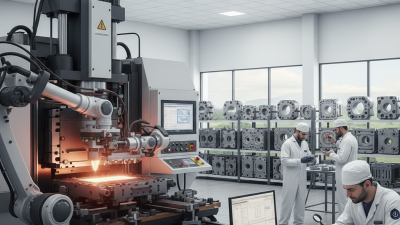
Metal die casting suits high-volume production because it can form many consistent parts in repeatable cycles. Molten metal is injected into a steel die, filling shaped cavities before cooling into solid components. Thin ribs, mounting bosses, and curved channels can often be made as part of one piece. That matters. It can reduce the need for separate parts and extra assembly steps.
The process is useful for components with detailed geometry, such as housings with internal supports or brackets with several fastening points. A well-designed die helps control dimensions across production runs, while automated handling can support steady output. However, the die requires careful engineering. Gate placement, wall thickness, and cooling behavior affect filling and finished-part quality. Small design choices can create large production problems.
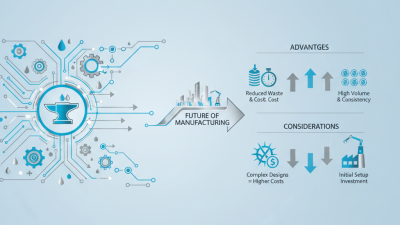
High-volume economics depend on the part, material, and expected order size. Tooling costs are substantial, so casting may be less suitable when quantities are low or designs change often. Engineers should review draft angles, machining needs, and inspection requirements before committing to a die. Even then, defects can occur, and process settings may need adjustment. I would not assume that a complex shape is automatically castable; early design reviews can reveal features that need revision.
How to Evaluate Tooling Costs, Production Volume, and Part Requirements
Metal die casting can be a strong choice when parts need consistent dimensions and production runs are substantial. The tooling cost is often the first big number to review. Ask what it includes: cavity design, sample runs, adjustments, and expected tool life. A low quote can hide assumptions. Check what happens if the first samples need changes.
Production volume affects the cost per part. A custom die may be hard to justify for a small batch, but repeated orders can spread its cost across more units. Compare the full process, not just the casting price. Trimming, machining, surface finishing, and inspection can change the total. Part requirements matter too: tight tolerances, thin walls, complex shapes, and specified finishes may affect both tool design and production steps. Have an engineer review the drawing before committing; a small feature can complicate the die more than expected.
Tips: Share annual volume, forecast changes, material preferences, critical dimensions, and finish requirements when requesting estimates. Ask for sample parts and a clear breakdown of tooling and per-part costs. Check how dimensional variation will be inspected. If the design is still changing, pause and reassess the timing. That judgment call is easy to get wrong.

 +86-13516964051


 CONTACT NUMBER
 CONTACT NUMBER