Top Tips for Sourcing Quality Aluminum Cast Parts?
In the competitive sector of manufacturing, sourcing quality aluminum cast parts is critical. Reliable suppliers can significantly impact production efficiency and product quality. According to a recent industry report by the Aluminum Association, the demand for aluminum cast parts is projected to grow by 5% annually through 2028. This growth underscores the importance of finding reputable sources.
Expert insights can guide manufacturers in this process. Dr. Emily Thompson, a distinguished professor in Metallurgical Engineering, states, "Quality in aluminum casting comes from understanding both materials and processes." Her perspective highlights the need for deep knowledge in sourcing decisions. Companies must evaluate suppliers not only on cost but also on their technical capabilities and quality assurance practices.
Reflecting on sourcing challenges, many businesses experience difficulties in balancing cost and quality. It’s essential to examine past performance records of potential suppliers. The right choice in aluminum cast parts can enhance product durability and functionality. Identifying the best sources will require careful consideration of multiple factors, but the rewards are worth the effort.

Understanding Aluminum Casting: Types and Applications
Aluminum casting is a versatile process used in various industries. The types of aluminum casting methods include sand casting, die casting, and investment casting. Each method has distinct advantages that cater to specific applications. For instance, sand casting is excellent for custom parts, while die casting is suitable for high-volume production.
When sourcing quality aluminum cast parts, consider the type of casting required for your project. Matching the casting method with your needs ensures reliability and performance. Pay attention to the supplier's manufacturing capabilities. Experience matters; an experienced supplier can avoid common pitfalls.
Look for certifications that indicate quality control standards. Suppliers with ISO certifications often adhere to strict quality processes. Do not overlook the significance of customer reviews. Engaging with reviews helps gauge reliability. A mix of good and bad feedback can provide a clearer picture.
In conclusion, understanding the different types of aluminum casting and their applications is essential. Careful sourcing can lead to reliable parts that enhance product performance. Ill-formed communication with suppliers may lead to discrepancies; ensure clarity in your requirements.
Identifying Quality Standards for Aluminum Cast Parts
When sourcing aluminum cast parts, understanding quality standards is essential. The industry uses various standards to measure quality. These can include ASTM, ISO, and other regional certifications. Knowing which standards apply to your project ensures you select reliable suppliers.
Look for suppliers who openly share their certifications and testing results. A reputable supplier will often have a clear quality assurance process. However, be cautious. Not all certifications guarantee the same level of quality. Verify their authenticity and relevance to your specific needs.
Inspecting the aluminum cast parts is crucial. Check for surface finishes, dimensional accuracy, and any signs of defects like porosity. Request sample pieces or prototypes to assess quality before committing to a larger order. It’s also wise to review customer feedback and case studies. This can provide insight into a supplier’s reliability. Remember, quality sourcing can sometimes feel overwhelming. Take the time to reflect on your choices and ensure they align with your goals.
Top Tips for Sourcing Quality Aluminum Cast Parts
| Quality Standard |
Description |
Measurement Method |
Compliance Level |
| ASTM B26/B26M |
Standard Specification for Aluminum-Alloy Sand Castings |
Visual Inspection and Mechanical Testing |
Meets Standard |
| ISO 9001 |
Quality Management Systems - Requirements |
Audit and Documentation Review |
Certified |
| MIL-STD-105E |
Sampling Procedures and Tables for Inspection by Attributes |
Statistical Sampling |
Pass |
| ASTM A356 |
Standard Specification for Aluminum Alloys Sand Castings |
Chemical Analysis and Mechanical Testing |
Compliant |
| DIN 1725 |
Aluminum Castings - Degree of Purity |
Spectral Analysis |
Approved |
Evaluating Suppliers: Key Criteria for Selection
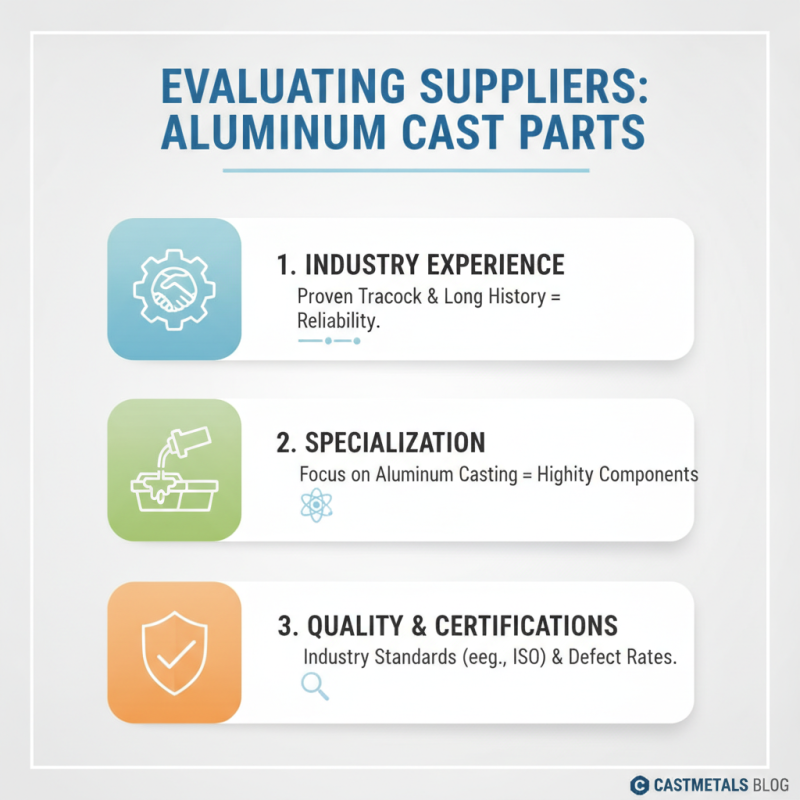
Selecting the right supplier for aluminum cast parts is crucial. Start by evaluating their experience in the industry. Look for suppliers with a proven track record. A long history often indicates reliability. Consider their specialization in aluminum casting. This focus can lead to higher quality components.
Next, examine the supplier's production capabilities. What types of machinery do they use? Outdated equipment might hinder quality. Ask about their processes for quality control. Effective quality checks often prevent defects. Request samples to assess workmanship. This hands-on approach helps identify potential issues early.
Communication is another vital factor. Suppliers should respond promptly and clearly. Poor communication can lead to misunderstandings. Reliability in communication reflects their overall commitment. Also, consider their location. Proximity can reduce shipping costs and lead times. Aim for a supplier who meets most, if not all, of these criteria. Challenges will arise, but thorough evaluation minimizes risks.
Inspection and Testing Methods for Aluminum Cast Parts
When sourcing quality aluminum cast parts, inspection and testing are crucial. Various methods help ensure the parts meet specified standards. Visual inspection is a common starting point. Check for surface defects, such as cracks or pits. This step helps identify obvious issues before further testing.
Non-destructive testing (NDT) methods are highly effective. Techniques like ultrasonic testing and X-ray inspection reveal internal flaws without damaging the part. These methods provide a deeper understanding of the integrity of the aluminum cast. They often require specialized training. Choose certified inspectors who have experience with these techniques.
Conducting mechanical property tests is essential too. Tensile strength and hardness tests provide insights into the material's performance. Consider comparing results with industry standards. Documentation of these tests enhances credibility. Quality parts are not just about visuals; performance under stress is vital. Investing in thorough inspection processes can improve reliability. Even the most promising suppliers may have occasional defects. Regular audits and feedback loops can address these issues more effectively.
Top Tips for Sourcing Quality Aluminum Cast Parts
Best Practices for Ongoing Supplier Relationships and Quality Assurance
Building strong supplier relationships is vital for sourcing quality aluminum cast parts. Consistent communication is key. Regular check-ins can reveal issues early. A study by the American Foundry Society shows that transparency can lead to productivity increases of up to 15%. This underscores the need to keep an open dialogue with suppliers.
Quality assurance cannot be an afterthought. Implement regular audits, both self-audits and third-party evaluations. According to a report from the Aluminum Association, 30% of manufacturing defects stem from supply chain management failures. This highlights the importance of ongoing training for suppliers. By investing in their capabilities, manufacturers can reduce defects and improve overall quality.
Documentation should be rigorous. Track changes in materials and processes. This can help identify the root causes of any quality issues. Regular reviews of supplier performance metrics are essential. They not only highlight improvements but also areas needing attention. Acknowledging shortcomings in the supply chain allows for continual refinement.

 +86-13516964051


 CONTACT NUMBER
 CONTACT NUMBER