Leave Your Message

2026 Top Aluminum Die Casting Parts Manufacturers?

Choosing among Aluminum Die Casting Parts manufacturers in 2026 takes more than comparing prices or polished websites. A supplier’s real strengths show up in the details: stable wall thickness, clean casting surfaces, controlled porosity, and parts that fit after machining. Small differences matter. A bracket that looks sound on a sample may behave differently across a full production run.

This guide introduces manufacturers to consider and explains what buyers should verify before requesting a quote. Look for relevant experience with your alloy, part geometry, annual volume, and finishing needs. Ask how the company monitors tooling wear, dimensional variation, and defects, and whether it can provide inspection records and material traceability. Clear answers are a good sign. Vague assurances are not.

A strong partner should also discuss design trade-offs, such as draft angles, rib placement, and where machining allowance is needed. Those early conversations can reduce scrap and avoid costly revisions. Still, no shortlist can replace a factory assessment or a representative sample. That takes time. In my view, buyer guides can simplify research, but they cannot prove that one manufacturer is right for every project. Use the names and criteria here as a starting point, then compare documented capabilities, communication, and sample results against your own requirements.
2026 Top Aluminum Die Casting Parts Manufacturers?

How Aluminum Die Casting Parts Are Designed and Produced

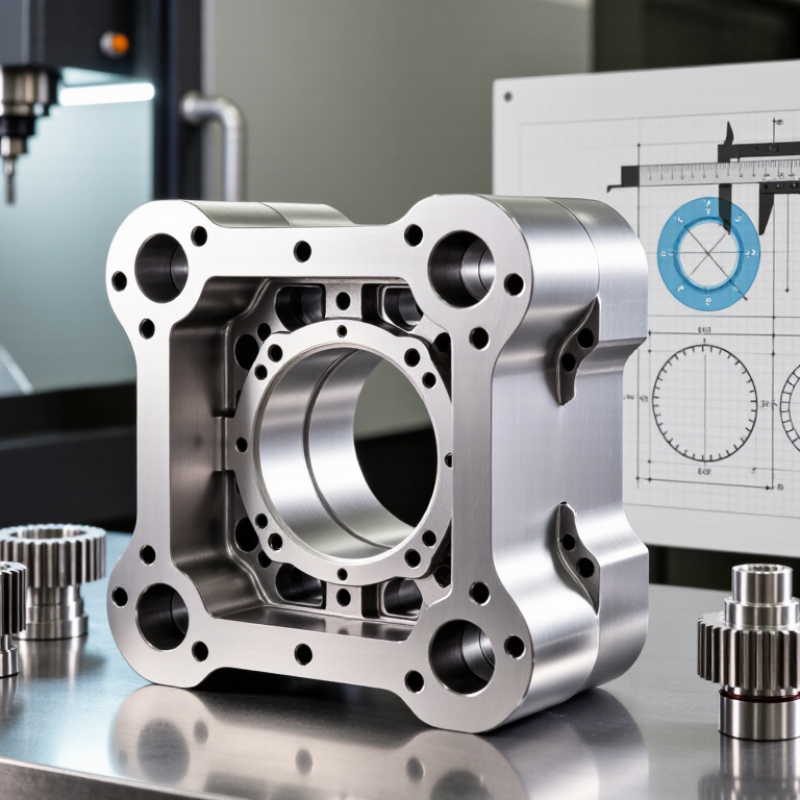
Aluminum die casting parts are designed around the way molten metal fills a steel mold. Engineers start with the part’s purpose, load, and operating environment. They then shape the CAD model with draft angles, consistent wall thickness, and rounded transitions. These details help the casting release from the die and reduce abrupt changes in metal flow. A CAD model can look clean and still hide a stubborn fill problem. Simulation and prototype trials can reveal trapped air, incomplete filling, or areas prone to shrinkage.

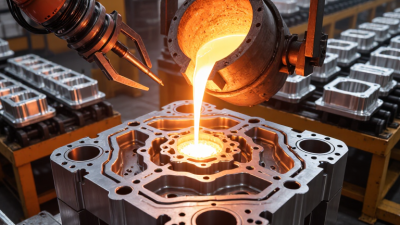
During production, aluminum alloy is heated and injected into a closed die under pressure. The metal cools quickly, and the die opens to release the casting. Workers trim gates and flash before inspecting dimensions and visible surfaces. Some parts also need machining, heat treatment, or coating, depending on their use. Inspection may include measurement checks and, for critical areas, internal defect testing. The exact process depends on the geometry and performance requirements.

Tips: Keep ribs and walls reasonably uniform, and avoid sharp internal corners. Share critical dimensions and expected loads with the casting team early. Small details matter. It is also worth reviewing test results after the first production run; early assumptions about fill or finishing may need adjustment.

Key Criteria for Evaluating Aluminum Die Casting Manufacturers in 2026

Selecting an aluminum die casting manufacturer in 2026 means checking repeatability, not just quoted price. The International Aluminium Institute reports that recycling aluminum can use about 95% less energy than producing primary aluminum. Ask suppliers for recycled-content records, scrap-segregation procedures, and furnace-energy data. Request alloy certificates and lot-level traceability, too. Small details matter.

Then inspect the evidence behind quality claims. Ask for capability data on critical dimensions, inspection plans for internal porosity, and production reports—not just first-article samples. Check how the team monitors melt and die temperatures, tool wear, and corrective actions. A polished sample can hide an unstable process. Review actual defect trends where possible.

Capacity and communication matter as much as equipment. Compare cycle times, maintenance plans, backup capacity, and realistic lead times against your forecast. Confirm how cosmetic surfaces are protected during finishing and shipping. Assess total cost, defect rates, and engineering response time, not unit price alone. No supplier is flawless. A useful audit should reveal open issues, owners, and due dates; vague answers deserve follow-up. Factory visits help, but written records should tell the same story. That does not always happen.

Profiles of Leading Aluminum Die Casting Parts Manufacturers

Profiles of leading aluminum die casting parts manufacturers reveal distinct strengths, not one universal formula. Large-volume specialists often pair automated cells with in-house tooling and X-ray inspection. Their advantage is repeatability across complex housings and structural parts. Smaller technical suppliers may offer faster engineering changes and closer process support. That matters. Ask for sample capability data, not just machine capacity.

The U.S. Department of Energy’s lightweight-materials guidance estimates that reducing vehicle weight by 10% can improve fuel economy by 6–8%. This helps explain demand for aluminum components, but it does not prove every casting design is lighter or better. IEA’s Global EV Outlook 2024 reports nearly 14 million electric cars were sold in 2023, about 18% of global car sales. Manufacturers serving this segment need to manage thin walls, heat flow, and dimensional stability. Not always easy.

When comparing suppliers, examine alloy control, tooling life, porosity limits, and documented inspection methods. Request a process flow, recent production data, and examples of corrective actions. A polished sample can conceal variation between shifts. That is worth remembering. Also check whether machining, finishing, and leak testing happen under one quality system. A low quote may omit these steps, so compare total part cost and delivery risk, not casting price alone.

2026 Top Aluminum Die Casting Parts Manufacturers? — Profiles of Leading Aluminum Die Casting Parts Manufacturers

Anonymized capability profiles, not a ranked directory of named companies. These profiles summarize established aluminum die-casting processes and common supplier specializations; specific capabilities vary by facility and project.

Supplier Profile Typical Strength Common Processes Typical Applications Evaluation Points
High-Volume Automotive Parts Repeatable production of complex, thin-walled aluminum components at scale. High-pressure die casting, trimming, machining, and production inspection. Transmission housings, brackets, covers, and structural components. Review production capacity, process controls, traceability, and customer-specific quality approvals.
Large Structural Castings Integration of multiple smaller components into larger cast structures where the design and process allow. Large-part high-pressure die casting, die and process engineering, machining, and dimensional inspection. Vehicle body structures, chassis-related parts, and large equipment enclosures. Confirm part-size limits, alloy and heat-treatment suitability, tooling investment, and validation plan.
Precision, Small-to-Medium Components Close control of detailed features and production of compact parts with repeatable dimensions. High-pressure die casting, precision trimming, CNC machining, and dimensional measurement. Electrical housings, connectors, appliance parts, and compact mechanical components. Check critical-dimension capability, machining allowances, cosmetic standards, and inspection methods.
Electronics and Thermal-Management Parts Production of aluminum enclosures and heat-dissipating geometries, subject to the part design and operating requirements. High-pressure die casting, machining, surface finishing, and leak or dimensional testing when specified. LED housings, power-electronics enclosures, communication equipment, and heat sinks. Specify thermal, sealing, coating, electromagnetic, and environmental requirements in the part specification.
Engineering-Led, Lower-Volume Production Support for design iterations, tooling development, and production programs that do not require the highest volumes. Die casting with project-specific tooling, prototype or pre-production trials, and secondary machining. Industrial equipment, specialty vehicles, and new-product development programs. Assess tooling ownership, sampling schedule, engineering support, and change-control procedures.
Finishing and Assembly-Focused Supplier Delivery of more complete components by coordinating casting with downstream operations. Die casting, deburring, CNC machining, surface finishing, inspection, and assembly as contracted. Finished housings, machined mounting parts, and assemblies requiring multiple operations. Confirm which operations are performed in-house, applicable finish specifications, and final acceptance criteria.

Note: Aluminum alloy selection, achievable tolerances, casting quality, surface finish, and production economics depend on the component design, tooling, equipment, and agreed inspection requirements. Verify each supplier’s current capabilities directly before sourcing.

Comparing Manufacturer Capabilities, Quality, and Industry Applications

Choosing an aluminum die casting manufacturer in 2026 takes more than comparing machine sizes. Ask whether its press capacity matches your part’s projected area, wall thickness, and alloy needs. Strong suppliers can explain tooling design, sample runs, trimming, and secondary machining—not just quote a casting price. A thin-walled electronics housing and a structural vehicle component demand different process controls. Fit matters.

Tips: Request sample inspection records and a clear defect-handling process. Check how suppliers monitor porosity, dimensions, and alloy consistency. Ask for a production trial using your actual drawing. A polished sample alone proves little.

Quality comparisons should include measurable evidence. Look for documented inspection methods, calibrated equipment, material traceability, and corrective-action records. For heat-sensitive or load-bearing parts, discuss testing needs with the engineering team before approving a design. Applications may include automotive housings, industrial pumps, appliance frames, and electronic enclosures. Each brings different priorities, from dimensional stability to surface finish. Be cautious of rankings that rely on broad claims; a supplier’s best-fit process may not suit every project. I would still verify capacity on the factory floor, where brochures can leave out awkward details.

Emerging Trends Shaping Aluminum Die Casting Manufacturing in 2026

In 2026, aluminum die casting is becoming more data-led and energy-conscious. Simulation tools can flag thin walls, trapped air, and uneven cooling before a tool is cut. That can reduce costly trial shots. Still, software cannot replace a clean, repeatable melt or careful die maintenance. Small process drift matters.

Tips: Ask manufacturers for shot-to-shot data, not just a polished sample. Check how they track alloy batches, porosity, and dimensional variation. A simple cross-section review can reveal defects hidden beneath a smooth surface. Keep tolerances realistic.

Automation is spreading across ladling, trimming, and visual inspection, while sensors record pressure and die temperature. Recycled aluminum and lower-energy melting are gaining attention, but consistent chemistry remains essential. Electric vehicle housings and compact heat-management parts are pushing designs toward thinner walls and integrated features. These changes can save weight, yet complicate repair and quality checks. Not every upgrade pays back quickly. Some shops need time to prove stable results across long production runs.