+86-13516964051


Choosing the right Metal Casting Machine can shape product quality, production speed, and long-term operating costs. The decision deserves more than a quick comparison of prices and specifications. In a working foundry, a machine must handle real conditions, including changing alloy temperatures, uneven workloads, limited floor space, and demanding maintenance schedules.
These seven practical tips focus on the details that are often overlooked. They examine casting capacity, temperature control, automation, material compatibility, energy use, safety features, and supplier support. A machine may appear impressive in a brochure, yet perform poorly when operators face clogged channels or inconsistent mold filling. Ask for verified test data, service records, and references from facilities with similar production needs. Small details matter.
No machine is perfect.
My experience suggests that the best choice usually balances technical performance with operator confidence. A clear control panel can prevent costly mistakes during a busy shift. Accessible heating elements can shorten maintenance time. Reliable sensors can protect both the casting process and the finished product. Still, even a careful evaluation can miss hidden costs, such as spare parts, training, installation, and downtime during repairs.
Use these tips as a practical starting point, not as a rigid formula. Compare actual production requirements with measurable machine capabilities. Review safety documentation and applicable industry standards before making a purchase. A thoughtful decision may take longer, but it can support steadier output, safer work, and more predictable results.
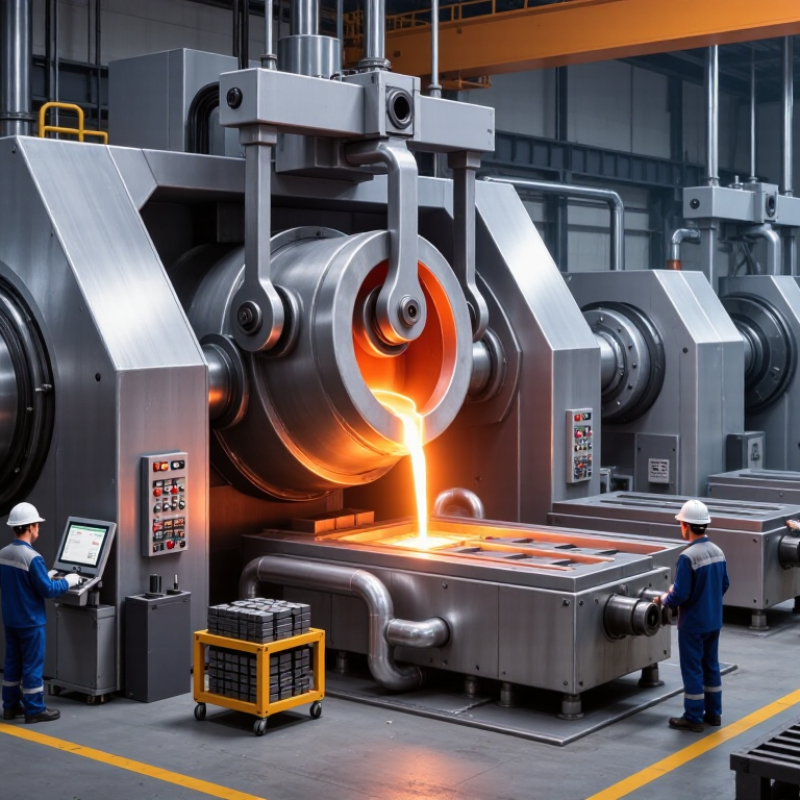
Choosing the right metal casting machine starts with defining the part, not comparing machine prices. Specify the alloy, melting temperature, fluidity, shrinkage, and expected defects. Aluminum housings need different pressure and cooling control than ductile iron valve bodies. ASTM B85 covers aluminum-alloy die castings, while ASTM A536 addresses ductile iron grades. These standards help translate material requirements into practical process limits.
Part size also controls machine capacity. Record length, wall thickness, projected area, mold dimensions, and finished weight. A 2-kilogram aluminum housing may require rapid filling and tight thermal control. A 40-kilogram iron component needs different clamping, pouring, and handling systems.
The 2023 World Foundry Census reported global casting production of about 109.7 million metric tonnes in 2022. That scale shows why small process assumptions can create expensive production losses.
Tolerance must be tied to the drawing and measurement method. Do not promise precision that the alloy, mold, or inspection system cannot repeat. Annual volume changes the decision again. Low volume may justify flexible equipment and simpler tooling; high volume demands automation, cycle-time stability, and predictable maintenance. The U.S. Department of Energy notes that casting can produce complex shapes with less material waste than many machining routes. Still, the machine is only one part of that result. I would review scrap records after pilot runs, because early calculations are often too optimistic.
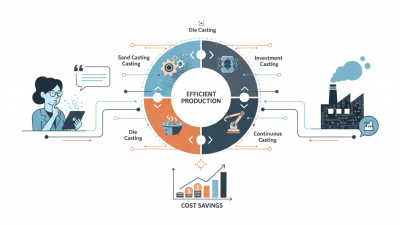
Start with the mold. Sand casting suits large, complex parts and changing designs because tooling costs remain relatively low. Investment casting produces fine details and tighter surfaces, but wax patterns require extra handling. Die casting favors high volumes, short cycles, and thin walls. Centrifugal casting works well for rings, pipes, and other rotational components.
Check seven practical points: alloy compatibility, part size, dimensional tolerance, production volume, cycle time, energy use, and maintenance access.
A machine for aluminum die casting may not handle steel investment work safely or efficiently. Grand View Research estimated the global metal casting market at about USD 151 billion in 2022, with continued growth through 2030. That scale increases pressure to choose equipment based on repeatable output, not purchase price alone.
Use measured evidence. The U.S. Department of Energy identifies melting as a major energy consumer in metal casting operations. Compare furnace efficiency, heat recovery, and idle-time losses. Ask operators to inspect mold filling, vibration, cooling, and ejection points. Small access problems become expensive downtime.
Seriously. Also review supplier documentation, safety records, spare-part availability, and training requirements. Reports provide useful benchmarks, but your own trial runs matter more. I would not trust a brochure alone.
Build a sample part, record defects, and test the machine under realistic shift conditions.
Choosing the Right Metal Casting Machine: Check Capacity Data
A casting machine rated from 20 to 4,000 tons of force covers a very wide production range. Do not select capacity from part weight alone. Projected area, cavity pressure, mold size, and safety margin matter more. A small housing may need high clamping force if its surface area is large. I have seen buyers choose machines by tonnage only, then struggle with flash around the parting line.
Pressure data needs equal attention. Many machines operate within a stated range of 500 to 2,000 bar pressure. Higher pressure can improve filling in thin sections, but it also increases stress on the mold, plunger, and locking system. Match pressure with the alloy, wall thickness, gate design, and required surface finish. Check whether the published value means hydraulic pressure, injection pressure, or actual cavity pressure. These figures are not interchangeable.
Review real operating records, not only brochure numbers. Ask for cycle data, pressure curves, shot-speed settings, and calibration dates for gauges. Confirm the machine maintains stable pressure during repeated cycles. A machine may reach 2,000 bar briefly but perform poorly at steady production speed. That detail is easy to miss. My own early evaluations focused too heavily on maximum force and pressure. The better approach compares usable capacity, mold compatibility, energy demand, maintenance access, and operator experience. Leave practical headroom, but avoid paying for capacity that your tooling cannot safely use.
Check the required clamping force and pressure range before comparing machines. The reference envelope below covers 20–4,000 tons of force and 500–2,000 bar of pressure.
These are broad selection ranges for initial screening. Clamping force and pressure are separate specifications and should not be compared directly by magnitude.
When choosing a metal casting machine, quality records reveal more than polished brochures. Ask whether the manufacturer operates an ISO 9001 quality management system. Certification alone is not enough. Review audit dates, corrective actions, and inspection procedures for incoming metal and finished castings. During a factory visit, look for clearly labeled samples, calibrated gauges, and traceable production records.
ASTM testing ASTM testing can show how consistently the machine supports real production. Request test reports for tensile strength, hardness, porosity, and dimensional stability when relevant. Confirm the testing method, sample location, and laboratory competence. A test result without this context may look authoritative but prove little. Ask for production samples, not only laboratory coupons. Hold one under bright light. Small surface defects can reveal unstable filling or cooling.
Scrap rate deserves careful attention. Compare the reported percentage with your alloy, mold design, part weight, and production volume. A low number may exclude rework or rejected parts. Check how tolerance is measured, including temperature, datum points, and gauge resolution. A machine claiming ±0.1 millimeter may not maintain it across every cavity. Practical trials matter. Run several batches and record variation, cycle time, and rejected pieces. Perfect data can be suspicious. I would rather see a clear explanation for occasional defects than a report with no weaknesses.
7 Tips for Choosing the Right Metal Casting Machine
Compare more than the purchase price. Measure cycle time, energy use, maintenance, safety, and return on investment. A machine producing one extra casting per cycle can outperform a cheaper model. Record actual cycle times during trials, including loading, cooling, trimming, and changeovers. Shorter is not always better. Poor cooling may increase defects and rework.
Energy deserves careful attention. The International Energy Agency reports that industry consumes about 37% of global final energy. Request measured energy data per casting, not only motor ratings. Check heating efficiency, standby consumption, compressed-air demand, and recovery options. The U.S. Department of Energy recommends compressed-air leak surveys because leaks can waste 20% to 30% of compressor output. That hidden cost can quietly damage ROI.
Maintenance data should include service hours, spare-part availability, lubrication points, and fault history. A simple spreadsheet can compare annual downtime across machines. Include operator training and guarding costs. The International Labour Organization estimates 2.78 million work-related deaths annually, so safety cannot remain a purchasing footnote. Calculate ROI using five-year costs, expected output, scrap, energy, labor, maintenance, and downtime. Be realistic about utilization. A machine running below capacity may never repay its premium. Sometimes, the best choice is less impressive.
Indicative engineering-planning benchmarks for producing aluminum components weighing approximately 0.5–2.0 kg. Values vary with part geometry, alloy, tooling, automation level, labor rates, utilization, and local energy prices.
| Decision Dimension | Cold-Chamber Die Casting |
Low-Pressure Die Casting |
Gravity Permanent- Mold Casting |
Squeeze Casting |
Green-Sand Casting |
|---|---|---|---|---|---|
| 1. Match the Machine to the Application | Thin-wall, high-volume parts; excellent repeatability and surface finish. | Structural parts requiring controlled filling and reduced turbulence. | Medium-volume parts with good mechanical properties and moderate detail. | Dense, pressure-assisted parts requiring high strength or low porosity. | Complex shapes, large sections, prototypes, and lower-volume production. |
| 2. Compare Cycle Time | 30–90 seconds Typical automated shot-to-shot cycle. |
90–240 seconds Longer filling and solidification time. |
120–360 seconds Often includes manual or robotic handling. |
90–300 seconds Depends heavily on pressure and cooling design. |
180–900 seconds Includes mold preparation, pouring, shakeout, and cleaning. |
| 3. Measure Energy Use | 12–25 kWh per machine-hour High hydraulic and holding-furnace demand. |
8–18 kWh per machine-hour Lower injection pressure than die casting. |
5–12 kWh per machine-hour Lower pressure; furnace efficiency remains important. |
10–22 kWh per machine-hour Pressure generation and thermal control add demand. |
4–10 kWh per machine-hour Electricity excludes gas-fired melting where applicable. |
| 4. Estimate Maintenance Load | High Die wear, hydraulic systems, lubrication, shot sleeves, and plungers. |
Medium Furnace, pressure-control, mold, and hydraulic maintenance. |
Low–Medium Fewer high-pressure components; mold upkeep remains essential. |
High Press, dies, hydraulic system, and thermal-control equipment. |
Medium Molding line, sand system, pattern tooling, and dust-control equipment. |
| 5. Review Safety Requirements | High control requirement Molten metal, high pressure, moving platens, noise, and die spray. |
Medium–High control requirement Molten metal, furnace access, pressure systems, and heat exposure. |
Medium control requirement Hot molds, molten metal handling, and manual loading risks. |
High control requirement High-force press movement and molten-metal exposure. |
Medium control requirement Heat, silica-containing dust, lifting, pouring, and shakeout hazards. |
| 6. Compare Indicative Total Cost of Ownership | US$1.8–4.5 million Five-year TCO for machine, tooling, utilities, labor, maintenance, and energy. |
US$1.2–3.0 million Five-year TCO under comparable utilization assumptions. |
US$0.8–2.2 million Lower equipment cost but greater labor content may apply. |
US$1.6–4.0 million Higher press and tooling investment with strong part performance. |
US$0.6–1.8 million Lower machine cost, but finishing, handling, and labor can increase unit cost. |
| 7. Calculate Payback and ROI | 18–36 months Potentially highest ROI when annual demand exceeds 150,000–250,000 parts. |
24–48 months Attractive for structural parts with stable medium-to-high demand. |
24–60 months Often suitable when demand is stable but not sufficient for die-casting economics. |
30–60 months ROI depends on the premium earned for strength, density, and reduced scrap. |
12–36 months Often favorable for low-to-medium volumes and frequent design changes. |
Benchmark basis: Cost ranges are indicative 2025 planning estimates in U.S. dollars for a new production cell, excluding land, building construction, taxes, financing, and major upstream melting infrastructure.
Energy assumption: Electricity priced at approximately US$0.12 per kWh. Actual consumption should be verified with machine power logs and furnace efficiency data.
ROI assumption: Payback estimates assume approximately 250 production days per year, stable demand, normal utilization, saleable yield above 90%, and a positive contribution margin. A project-specific model should include tooling life, scrap rate, labor, downtime, financing, and resale value.