 +86-13516964051


Leave Your Message
-
CONTACT NUMBER
-
 CONTACT NUMBER
 -
 CONTACT NUMBER
China’s metal casting industry has expanded from basic equipment supply into advanced, integrated manufacturing solutions. Today, a reliable Metal Casting Machine must deliver more than pressure and speed. It should provide stable temperature control, repeatable shot profiles, accurate clamping, and accessible maintenance support.
John Campbell, a respected casting researcher and author, stated, “The quality of a casting is determined by the quality of the liquid metal.” This principle remains highly practical. A machine can appear powerful on a specification sheet, yet poor melt handling may still create porosity, cold shuts, or inconsistent dimensions. Small details matter. Furnace readings. Injection curves. Die alignment. Cooling channels.
This guide examines China’s top 10 Metal Casting Machine manufacturers through practical purchasing factors. These include machine structure, automation capability, energy use, software control, production experience, export support, and after-sales service. Evidence such as factory records, customer applications, certifications, and response times deserves careful attention. A polished website is not enough.
The ranking is a useful starting point, not an absolute verdict. Manufacturer data is sometimes incomplete, and advertised cycle times may depend on ideal conditions. That limitation should be acknowledged. Buyers must compare machines against real products, alloy grades, mold sizes, and production targets. A machine producing automotive housings may not suit precision hardware components. The best supplier is not always the largest one. It is the one that matches technical capability with dependable execution.
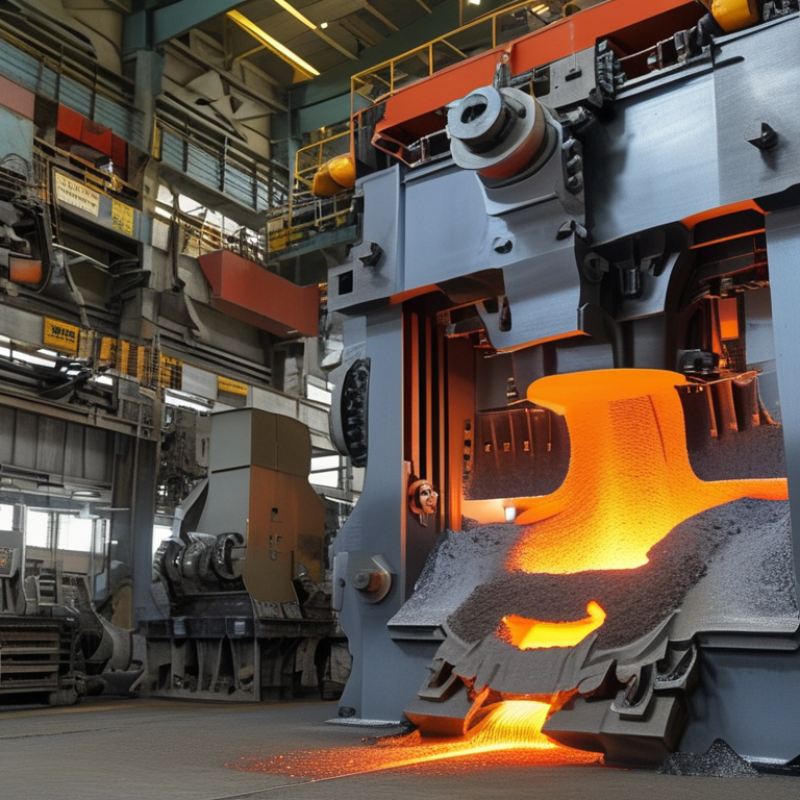
A metal casting machine shapes molten metal inside a prepared mold. It controls filling, pressure, cooling, and part removal. Common systems support die casting, sand casting, investment casting, and centrifugal casting. Each method suits different alloys, sizes, and surface requirements.
In a pressure die casting machine, an operator loads metal into a heated chamber. A plunger pushes the liquid metal into a locked steel die. Sensors monitor injection speed, pressure, and temperature. Cooling channels remove heat through the die walls. After solidification, ejector pins release the part. The cycle then begins again. Timing matters greatly. A small delay can create pores, cracks, or incomplete edges.
Reliable operation depends on more than machine capacity. Technicians inspect clamping force, hydraulic lines, mold alignment, and temperature readings before production. I have found that clean vents often improve quality more than higher injection pressure. Still, no setting works for every alloy or mold design. This is where practical judgment matters. A machine may report stable values while producing uneven surfaces. Operators should compare sensor data with the actual casting, including its weight, dimensions, and visible defects. Regular maintenance also protects repeatability, but maintenance plans are not always followed perfectly. That weakness deserves honest review when evaluating China’s leading metal casting machine manufacturers.
| No. | Machine Type | How It Works | Typical Materials | Typical Part Size or Output | Common Operating Range | Main Advantages | Typical Applications |
|---|---|---|---|---|---|---|---|
| 1 | High-Pressure Die Casting Machine | Molten non-ferrous metal is injected into a reusable steel die at high speed and pressure. The die is opened after solidification and the casting is ejected. | Aluminum, zinc and magnesium alloys | Small to medium thin-walled parts; clamping forces commonly range from about 160 to 4,000 tonnes. | Injection pressure commonly about 300–1,500 bar; die temperatures often about 180–350°C, depending on the alloy and process. | Fast cycles, excellent repeatability, smooth surfaces and the ability to produce thin sections. | Automotive housings, structural brackets, appliance components, electronics enclosures and power-tool parts. |
| 2 | Low-Pressure Die Casting Machine | Low gas pressure applied to the surface of a molten-metal furnace pushes the alloy upward through a ceramic riser tube into a permanent die. | Aluminum and magnesium alloys; some copper alloys | Small to medium castings, commonly from less than 1 kg to approximately 100 kg per part. | Metal pressure commonly about 0.2–1.0 bar above atmospheric pressure; filling is slower than high-pressure die casting. | Good directional solidification, high material yield and reduced turbulence during filling. | Automotive wheels, cylinder heads, suspension parts and other sound, moderately complex castings. |
| 3 | Gravity Die Casting Machine | Molten metal flows into a permanent metal mold solely under gravity. The mold may be tilted or rotated to improve filling and feeding. | Aluminum, copper alloys, zinc and selected iron alloys | Small to medium castings, commonly from several hundred grams to about 50 kg. | Die preheating commonly about 150–400°C; filling pressure is generated by the metal head rather than an external pump. | Reusable tooling, better dimensional consistency than sand casting and lower porosity than many pressure processes. | Automotive housings, manifolds, pump bodies, cookware and engineering components. |
| 4 | Sand Molding and Sand Casting Machine | A pattern forms a cavity in bonded or chemically bonded sand. Molten metal is poured into the cavity, and the sand mold is broken after solidification. | Gray iron, ductile iron, steel, aluminum, bronze and other alloys | From small components to castings weighing several tonnes, depending on the molding line and flask size. | Molding pressure varies by technology; automatic lines may use pneumatic or hydraulic compaction, while manual molds rely on mechanical or hand ramming. | Low tooling cost, broad alloy compatibility and suitability for complex shapes and large parts. | Pump bodies, machine bases, engine blocks, valves, pipes and heavy industrial castings. |
| 5 | Shell Molding Machine | Resin-coated sand is heated against a metal pattern to form a thin, rigid shell. Two shell halves are assembled before metal is poured. | Iron, steel, aluminum and copper alloys | Small to medium precision castings, generally from a few grams to approximately 25 kg. | Pattern temperatures commonly about 200–300°C; shell thickness is often about 5–15 mm. | Better surface finish and dimensional accuracy than conventional green-sand molding, with relatively low machining allowance. | Gears, valve bodies, connecting parts, manifolds and precision industrial components. |
| 6 | Investment Casting Equipment | A wax or polymer pattern is coated with ceramic slurry and stucco to build a shell. The pattern is removed, the shell is fired, and molten metal is poured into the ceramic cavity. | Stainless steel, carbon steel, nickel alloys, cobalt alloys, aluminum and titanium alloys | Small precision parts, commonly from a few grams to approximately 25 kg, with larger parts possible using specialized systems. | Ceramic shell firing commonly about 800–1,100°C; pouring temperature depends on alloy and is often approximately 700–1,700°C. | Excellent detail reproduction, thin sections and near-net-shape production with minimal parting lines. | 航空 and medical components, turbine parts, impellers, surgical instruments and complex engineering hardware. |
| 7 | Centrifugal Casting Machine | The mold rotates while molten metal is poured. Centrifugal force drives the metal against the mold wall and helps separate some inclusions toward the inner surface. | Cast iron, steel, stainless steel, bronze, copper alloys and aluminum alloys | Cylindrical products ranging from small sleeves to pipes several metres long, depending on equipment design. | Rotation speed commonly ranges from about 300 to 2,000 rpm, depending on mold diameter and alloy density. | Dense outer structure, good metallurgical integrity and reduced need for cores in tubular products. | Pipes, bushings, bearing shells, rings, cylinder liners and rolls. |
| 8 | Continuous Casting Machine | Molten metal enters a water-cooled mold, begins to solidify into a strand and is continuously withdrawn, cooled and cut to length. | Steel, copper, aluminum and selected non-ferrous alloys | Billets, blooms, slabs, strips, rods and tubes; production is continuous rather than batch-based. | Steel strand withdrawal speeds commonly range from about 0.5–3.0 m/min, while non-ferrous systems may operate at higher speeds. | High productivity, reduced remelting and consistent semi-finished dimensions. | Steel billets and slabs, copper rod, aluminum slab and non-ferrous bar production. |
| 9 | Squeeze Casting Machine | Molten metal is poured into a die and then solidified under high mechanical pressure from a punch or upper die. | Aluminum, magnesium, copper alloys and selected ferrous alloys | Small to medium structural parts, commonly from about 0.5 to 50 kg. | Applied pressure commonly about 50–200 MPa; die preheating often about 200–400°C for aluminum alloys. | Low gas porosity, high strength and improved fatigue performance compared with many conventional casting methods. | Automotive suspension components, brake parts, wheels, structural housings and high-strength engineering parts. |
| 10 | Vacuum Casting Machine | Air is removed from the mold cavity or chamber before and during filling, reducing gas entrapment as molten metal enters the mold. | Aluminum, magnesium, zinc, titanium, nickel alloys and selected steels | Precision parts ranging from small components to medium-sized structural castings. | Vacuum levels commonly range from approximately 10 to 500 mbar absolute, depending on the process and equipment. | Lower porosity, improved weldability and heat-treatment capability, plus better filling of thin sections. | Automotive structural parts, aerospace components, electronic housings and pressure-tight castings. |
Note: Operating ranges are typical industry values and vary according to alloy composition, part geometry, mold design, machine size, automation level and applicable production standards.